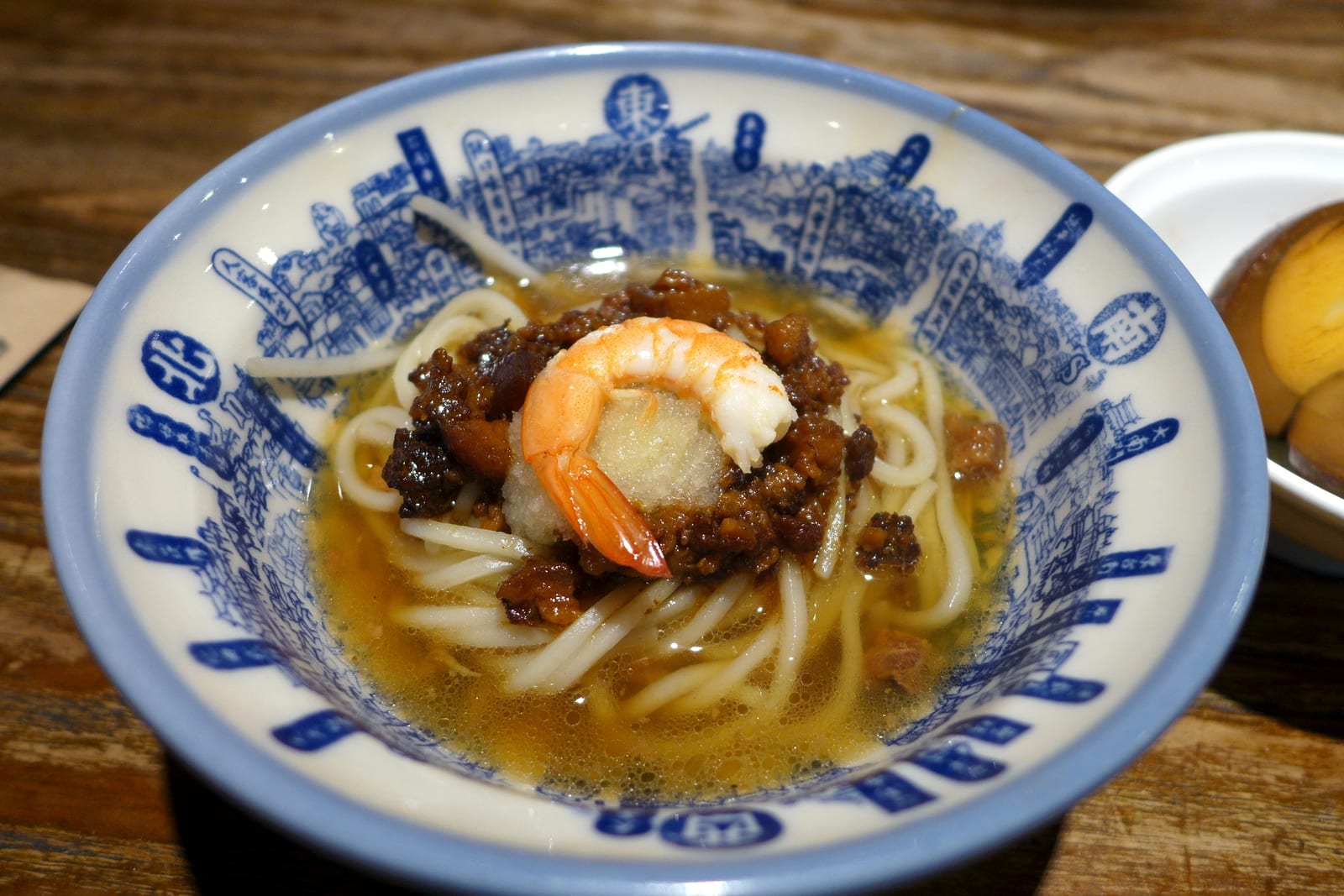
Danzai noodles are a Tainan-born style of noodle soup built on shrimp broth and oil-onion braised pork, tracing back to 1895 during the late Qing dynasty, when Tainan fisherman Hong Yu-tou carried a shoulder pole through the streets selling noodles during the slow “small month” season between catches — the origin of the name “Du Xiao Yue,” or “getting through the lean month.” Small in portion but rich in flavor, it marks the starting point of Tainan's noodle culture and remains one of the city's most familiar tastes.
Danzai noodles trace back to 1895 (the 20th year of the Qing Guangxu era), when founder Hong Yu-tou sold noodles from a shoulder pole during the fishing off-season known as the “small month” — the origin of the shop name “Du Xiao Yue.” The restaurant run by his descendants has continued for four generations. In a 2017 online poll held by the Tainan City Cultural Affairs Bureau on “Tainan cultural keywords,” danzai noodles ranked first, reflecting their status as a defining symbol of Tainan's food culture.
What are Danzai Noodles
Danzai noodles are a Tainan-born style of Taiwanese noodle soup, built around oil-onion braised pork, shrimp broth, and a modest portion of oil noodles. In earlier times, fishermen who couldn't go out to sea during the slow season — the "small month" — would carry a shoulder pole (dan zi) through the streets selling noodles to supplement their income. The name "Du Xiao Yue" (Getting Through the Lean Month) and this history of seafaring life are inseparable.
The defining characteristics are "small bowl, few noodles, concentrated flavor" — not a dish for filling up, but a refined snack enjoyed bite by bite for its layered aromas. The soul is the braised pork that has been simmered over years: salty, sweet, and lingering. Paired with a shrimp-head broth and topped with a whole fresh shrimp, the portion is modest but the flavor is full. This is both the origin and the defining emblem of Tainan's noodle culture.
How to eat it properly
Local knowledge
Verified endorsements (sponsored content filtered out)
- Tainan is the universally recognized birthplace of danzai noodles, making them one of the original categories of Taiwanese noodle soup.
- The flagship shop "Du Xiao Yue" traces its roots to 1895 and is known for a century of family operation and its "lean month" seafaring narrative.
- Although not a Michelin-listed restaurant, its status rests on its founding position and the vast accumulation of long-term local reviews.
Practical tips
- Du Xiao Yue's flagship and original shop are both located along Zhongzheng Road in Zhongxi District, close to the Guohua Street and Hai'an Road commercial areas.
- Traditional danzai noodle portions are small — consider adding a braised egg, side dishes, or ordering multiple bowls to feel satisfied.
- Zhongxi District is the core cluster for Tainan street food; you can continue on to nearby noodle shops, porridge stalls, and fried-food veterans.
Information compiled from the Michelin Guide, the Tainan City Government Tourism website, and public reviews, with sponsored content filtered out.
Frequently Asked Questions
When did danzai noodles originate?
Danzai noodles originated in 1895, when Tainan native Hong Yu-tou began selling noodles from a shoulder pole during the fishing off-season.
What does the name “Du Xiao Yue” mean?
“Xiao yue” is Taiwanese Hokkien for a lean, low-income season; Hong sold noodles to get through the fishing off-season, giving rise to the name “Du Xiao Yue,” or getting through the lean month.
What is danzai noodles' status in Tainan's food culture?
In a 2017 online poll held by the Tainan City Cultural Affairs Bureau, danzai noodles ranked first among Tainan cultural keywords, reflecting their role as a defining symbol of the city's noodle culture.
Sources
- 擔仔麵 - 維基百科,自由的百科全書 — 起源、洪芋頭、2017年台南文化關鍵詞票選第一名
- 120年前「洪芋頭」挑擔躲颱風 賣麵「度小月」 — TVBS報導,1895年起源與洪芋頭故事
- Profile – Du Hsiao Yueh — 官方沿革,四代傳承