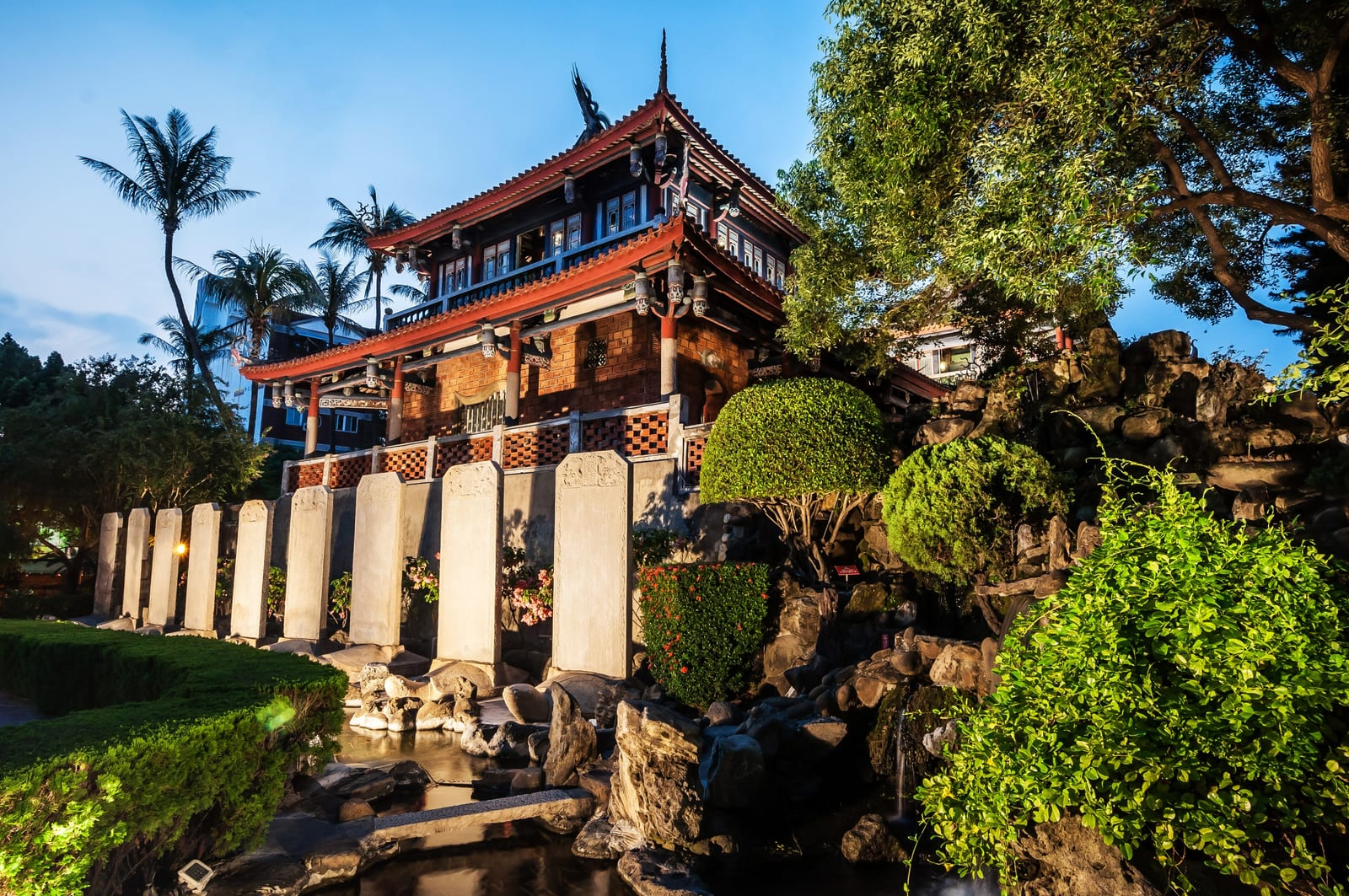
Chihkan Tower is a cluster of Qing-dynasty temple buildings in Tainan's West Central District, built atop the ruins of a Dutch fortress; its predecessor, Fort Provintia, was constructed by the Dutch East India Company in 1653 and completed in 1655. After Koxinga expelled the Dutch, the fort fell into disuse, and the Sea God Temple and Wenchang Pavilion were later built on the site during the Qing dynasty. Nine imperial turtle-back stelae erected during the Qianlong era, commemorating General Fukanggan's suppression of the Lin Shuangwen Rebellion, were relocated here in 1961, making this the most historically layered plot of land in Tainan.
Fort Provintia was built by the Dutch East India Company in 1653 and completed in 1655. After Koxinga expelled the Dutch, the fort fell into disuse, and the Sea God Temple and Wenchang Pavilion were subsequently built on the site during the Qing dynasty. The nine imperial turtle-back stelae in front of the temple were erected between the 51st and 53rd years of the Qianlong reign (1786–1788); Emperor Qianlong personally composed commemorative poems marking General Fukanggan's suppression of the Lin Shuangwen Rebellion and the lifting of the siege of Zhuluo City — an event that led to the city being renamed 'Jiayi' (Chiayi). The stelae were originally housed in Fukanggan's memorial shrine, moved outside the Great South Gate wall in 1935, and relocated to their present site at Chihkan Tower in 1961.
What to See at Chihkan Tower
In 1653, the Dutch East India Company built Fort Provintia here as a commercial and administrative hub. After Koxinga expelled the Dutch, the fortress gradually fell into disuse; during the Qing dynasty, the Sea God Temple and Wenchang Pavilion were built successively on the old site. The existing structures follow a Qing-dynasty layout, yet the lower levels retain Dutch-era brick foundations, creating a rare example of multiple dynasties overlapping at a single location.
Nine bixi (tortoise-shaped mythical beasts) carrying stele stand arranged in the temple forecourt; the inscriptions record important historical events of the Qing dynasty. The second floor of the Wenchang Pavilion enshrines Kuixing — a traditional wish-making destination for Tainan students. The pavilion offers a bird's-eye view of the surrounding streetscape, making it a good vantage point for understanding the street layout of the West-Central District.
How to Make the Most of Your Visit
Practical Information
Getting There & Timing
- Located on Section 2 of Minzu Road in the West-Central District; within walking distance of Tainan Railway Station (about 15 minutes) or reachable by city bus.
- Opening hours are subject to official announcements — check the Tainan City Bureau of Cultural Affairs or the site's official website before you go.
- Crowds are heavier on weekends; weekday mornings are relatively uncrowded, giving you more time to observe architectural details.
Nearby Connections
- Walking distance to Sacrificial Rites Martial Temple and Great Mazu Temple (Datianhougong), forming a West-Central District temple walking route.
- Guohua Street and Yongle Market are about a 5-minute walk away — a good option for a meal after your visit.
For some details, please consult the official information of the Tainan City Bureau of Cultural Affairs.
Frequently Asked Questions
What was Chihkan Tower's predecessor?
Its predecessor was Fort Provintia, built by the Dutch East India Company in 1653 and completed in 1655.
What event do the nine stelae in front of Chihkan Tower commemorate?
They commemorate General Fukanggan's suppression of the Lin Shuangwen Rebellion and the lifting of the siege of Zhuluo City during the Qianlong era, an event that also led to the city being renamed Jiayi.
When were the nine imperial turtle stelae moved to Chihkan Tower?
They were originally kept at Fukanggan's memorial shrine, moved outside the Great South Gate wall in 1935, and relocated to their present site at Chihkan Tower in 1961.
Sources
- 赤崁樓 - 維基百科 — 普羅民遮城建造(1653)與完工(1655)年代
- 清乾隆漢滿文御碑 - 維基百科 — 九座御龜碑年代(乾隆51-53年)與1935/1961年遷移歷史