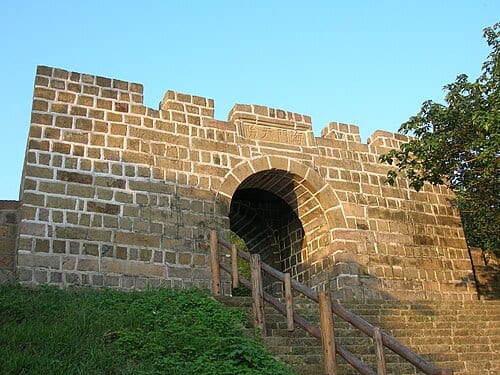
Ershawan Fort (Haimen Tianxian) is a nationally designated historic site on the hill south of Keelung Harbor, originally built in 1840 during the Opium War and rebuilt into its present form in 1886 under Governor Liu Mingchuan.
Ershawan Fort was first built as an old-style battery by Taiwan military commissioner Yao Ying in 1840 during the Opium War. After the Sino-French War, Taiwan governor Liu Mingchuan hired a German engineer to build a new breech-loading battery, completed in 1886; surviving structures include the stone gate, batteries, bunkers, a magazine, and an old well, with the gate inscribed "Haimen Tianxian." It was designated a first-grade national monument in 1983 and remains a nationally designated historic site.
What to See at Ershawan Fort
The fort was built along the hillside to command the entrance to Keelung Harbor, making it a key node in Qing-era Taiwan's coastal defense system. Following Sino-British conflict during the Daoguang period, the Qing court strengthened coastal defenses along the northern Taiwan coast, and Ershawan was rebuilt in this context. Surviving structures include a stone gate, ramparts, and gun emplacement bases. The gate lintel is inscribed with the four characters "Haimen Tianxian" (Heaven's Peril at the Sea Gate) — the fort's most recognizable landmark.
The fort's elevated position commands a view over the entrance to Keelung Harbor and the hills across the water. The trail runs along the hillside, offering opportunities to examine the details of the stone construction techniques. As a nationally designated historic site, the site is protected by the Ministry of Culture — do not touch or climb on the structures.
How to Get the Most Out of Your Visit
Practical Information
Getting There & Hours
- From Keelung Railway Station or Miaokou, walk or take a bus to Zhongzheng Road, then follow the trail signs uphill — approximately 15–20 minutes on foot.
- Opening hours are subject to announcements from the Ministry of Culture or the managing authority; check in advance to avoid temporary closures.
Nearby Connections
- Dashawan Beach Archaeological Site is located at the foot of the hill and can be combined into the same day's itinerary.
- Keelung Harbor plaza is within walking distance — a good destination after descending the hill.
Source: compiled from Ministry of Culture Cultural Heritage Bureau national historic site records and publicly available documents.
Frequently Asked Questions
When was Ershawan Fort built?
It was first built in 1840 during the Opium War, then rebuilt into its present form by Liu Mingchuan in 1886.
What does 'Haimen Tianxian' mean?
It is a four-character inscription on the gate describing the fort as a natural stronghold guarding Keelung Harbor's entrance.
Is Ershawan Fort a nationally designated historic site?
Yes, it was listed as a first-grade national monument in 1983 and remains a nationally designated historic site.
Sources
- 二沙灣砲臺 - 維基百科 — 興建年代、劉銘傳整建、國定古蹟身份
- 國定古蹟環景導覽 - 二沙灣砲台 — 文化部國定古蹟官方資料