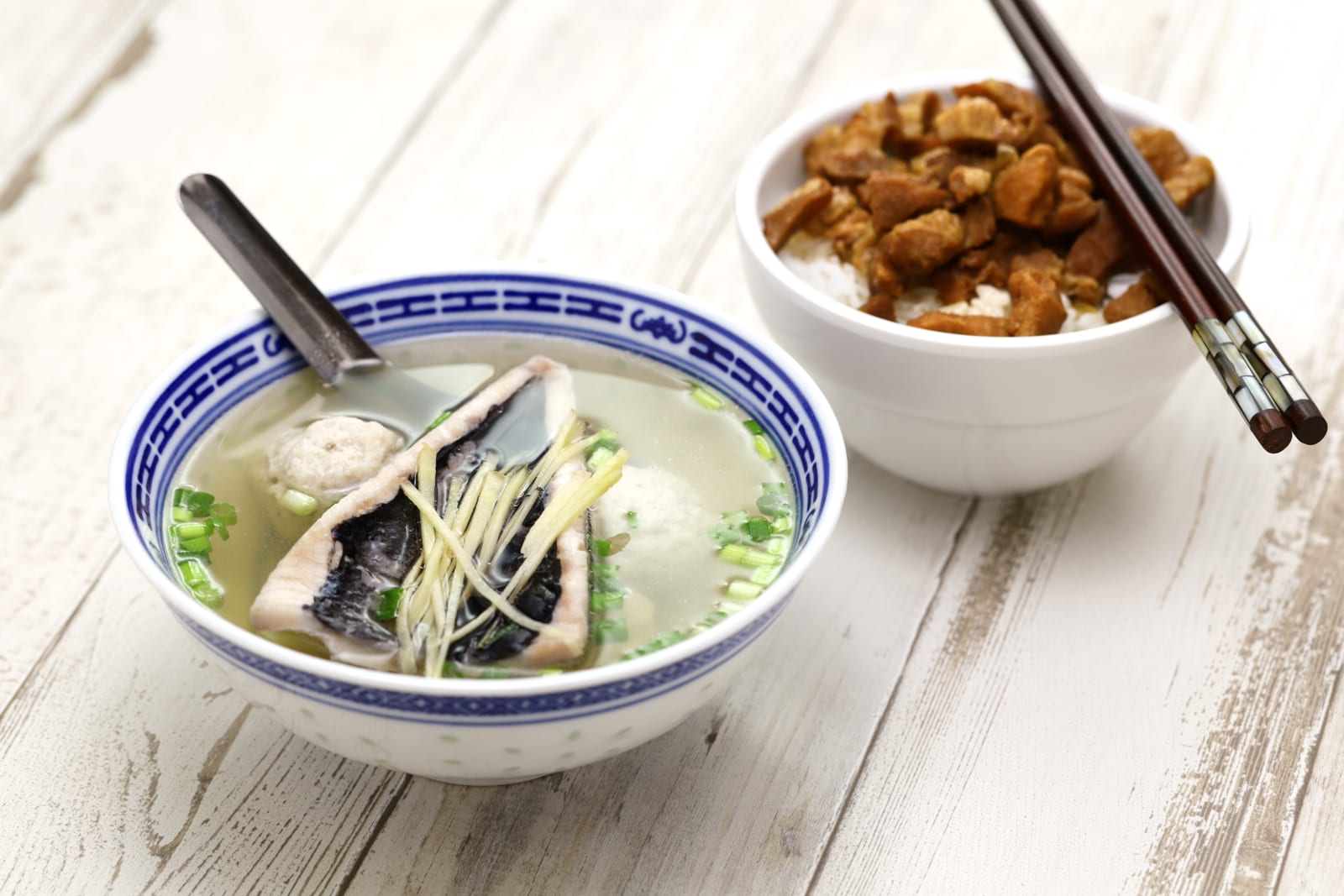
Milkfish belly is the cut taken from the abdominal section of the milkfish, where the fat is most concentrated and the flesh most tender — the richest part of the whole fish, and a signature everyday dish of the fishing communities in Tainan's Annan and Qigu districts. Tainan's milkfish is different, not because of the breed, but because the fish ponds are right next door — from water to griddle in under a day, before the fat has any chance to dissipate.
Milkfish farming in Tainan dates back to the Dutch colonial period (over 300 years ago), when Dutch settlers introduced aquaculture techniques from Indonesia, first testing them at Luermen (in today's Anping District). Today Tainan's milkfish farming area covers about 5,000 hectares, accounting for roughly 50% of Taiwan's total annual production, with Qigu District holding the largest farmed area and Beimen, Xuejia, Jiangjun, and Annan Districts also serving as major production centers. In the 1980s, local fish farmer Lin Lie-tang developed a natural spawning technique for milkfish and became known as the 'father of milkfish.'
What Is Milkfish Belly
Milkfish belly is cut from the abdominal section, where the fat is most concentrated and the flesh most tender — the richest cut on the whole fish. In Tainan, the standard preparation is dry pan-frying: lightly seasoned with salt, placed in a hot pan over medium-high heat, the skin is fried until golden and bubbling without sticking, then flipped and finished with residual heat. The result is crispy skin with a satisfying chew and soft, white, silky flesh inside — close to the buttery texture of fatty tuna belly. Braised versions also exist, slow-cooked with soy sauce, rice wine, and ginger slices.
Tainan's Annan and Qigu districts are Taiwan's largest milkfish aquaculture zones, with fish ponds blanketing the coastal plain and a farming history of over three hundred years. For local fishing families, milkfish belly, milkfish intestine, and milkfish congee rotate through the daily table — these are everyday meals, not tourist-only dishes. The quality gap between freshly caught belly and farmed standard stock is significant: locally sold 'same-day catch' belly has noticeably better fat distribution and less fishy odor than frozen product.
How to Eat It Like a Local
Local Knowledge
Background
- Tainan's Annan and Qigu districts are Taiwan's largest milkfish aquaculture zones, with a farming history of over three hundred years — a cornerstone of the local fishing industry.
- Milkfish belly fat is concentrated in the abdominal cut; same-day fresh catch is far superior to frozen. It's best to buy directly from local fish markets or seafood restaurants that stock fresh belly.
- Milkfish belly and milkfish congee (another Tainan specialty) come from different parts of the fish and use different cooking methods. Both represent the fishing village food culture of Tainan and complement each other.
Visitor Tips
- Annan District fish markets and seafood restaurants along the Anshun area are the main places to find it. Go in the morning — supply is less reliable in the afternoon.
- Qigu District also has direct fish port sales. The trip pairs well with a day itinerary that includes the Black-Faced Spoonbill Ecological Reserve and the Qigu Salt Mountain.
- Freshly caught belly kept at low temperature is important — in summer, if you're carrying it for more than 2 hours, bring an ice pack.
Source: Annan District milkfish aquaculture industry records and Qigu fishing village field notes.
Frequently Asked Questions
When did milkfish farming begin in Tainan?
Milkfish farming in Tainan dates back to the Dutch colonial period, over 300 years ago, with Luermen (in today's Anping District) as the earliest test site.
Which part of Tainan has the largest milkfish farming area?
Qigu District has the largest farmed area in Tainan, with Beimen, Xuejia, Jiangjun, and Annan Districts also serving as major production centers; the city as a whole accounts for roughly half of Taiwan's total output.
How can you tell if milkfish belly is a same-day catch?
Same-day catch belly has intact skin and evenly distributed fat with less fishy odor; it's worth asking the vendor or fish market directly whether the fish was caught that day.
Sources
- 南臺灣的家魚-虱目魚 — 農業部官網,養殖歷史與地區概況
- 臺南虱目魚 — 農業部食農教育資訊整合平臺,產量與養殖面積數據