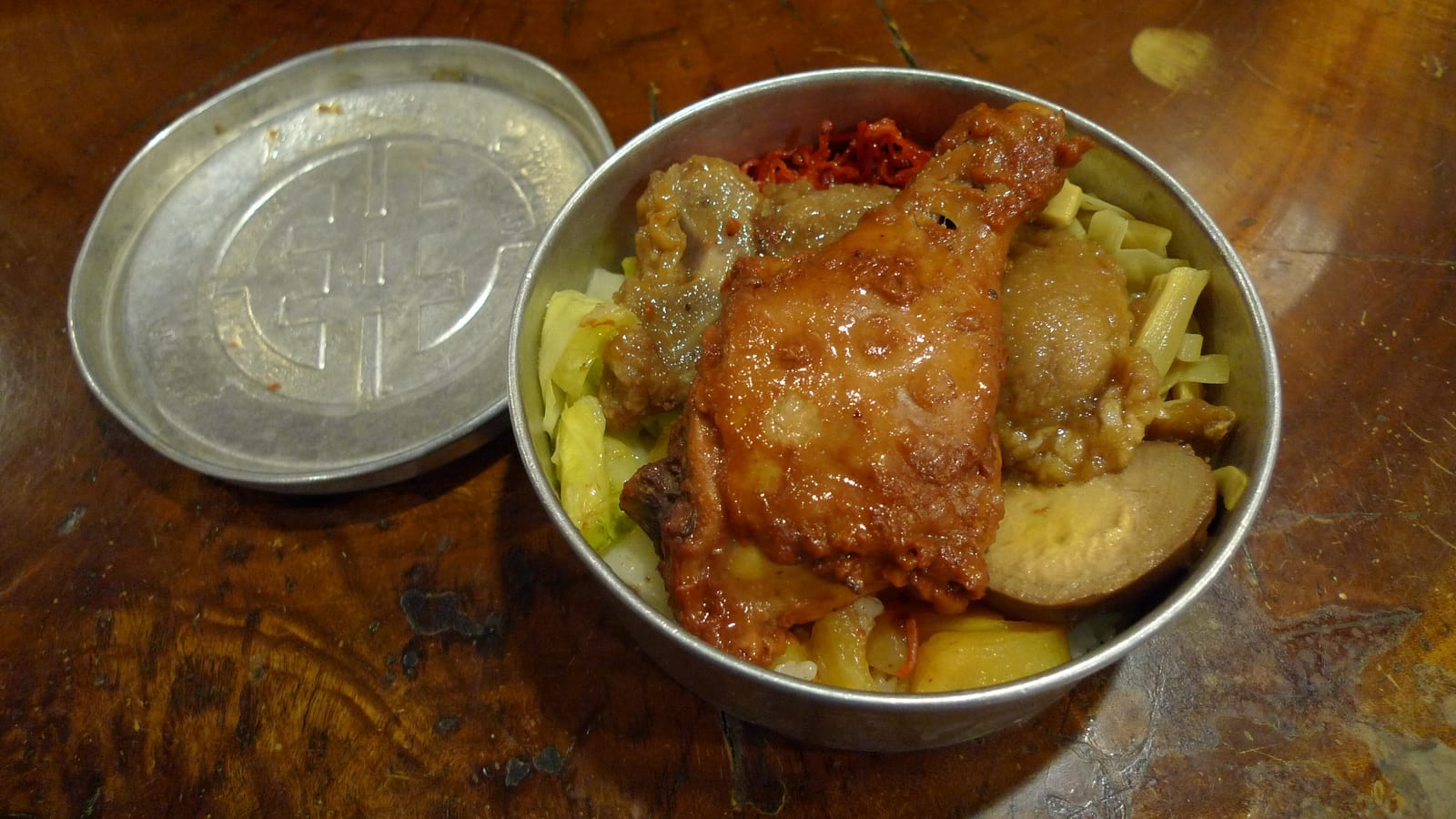
Fenqihu Railway Bento is a traditional railway lunchbox from Fenqihu Old Street in Chiayi's Zhuqi Township, rooted in the bento culture of the Alishan Forest Railway. Fenqihu Station sits at 1,403 meters — the largest midway stop on the railway's main line — and after the line opened in 1912, the railway-bento tradition took hold there; the predecessor of today's Fenqihu Grand Hotel, a diner called Dengshan Shitang, began focusing on made-to-order bento sales around the 1960s, keeping largely the same recipe for decades and often selling out before noon on weekends.
Fenqihu Station sits at an elevation of 1,403 meters and is the largest midway stop on the Alishan Forest Railway's main line (Alishan Forest Railway and Cultural Heritage Administration; Chinese Wikipedia entry for Fenqihu Station). The railway-bento tradition traces back to the line's 1912 opening, when workers and travelers stopped there around noon to eat; by roughly the 1960s, the area's largest bento vendor, Dengshan Shitang — predecessor of today's Fenqihu Grand Hotel — had shifted its focus to freshly made hot bentos. In 2002, convenience-store chain 7-Eleven interviewed second-generation successor Lin Jin-kun and later launched the nationwide 'Fenqihu Imperial Bento' product.
What is Fenqihu Railway Bento
The centerpiece is Taiwan-style pork ribs: marinated and deep-fried until crispy outside and juicy within, the meat clinging to the bone is especially flavorful. Side items include braised dried bamboo shoot (deeply colored, savory with a lingering sweetness), a soy-braised egg (seasoned to the core), and a small portion of pickled vegetables. The white rice absorbs the rib fat and bamboo shoot juices, growing more fragrant as you mix it. Traditionally served in a wooden bento box, later switched to an insulated metal box, while the ingredient ratio and flavor have stayed true to the original recipe.
Fenqihu developed during the Japanese colonial period because of the Alishan logging railway, serving as a midpoint stop that supplied bentos to railway workers and travelers — sharing the same cultural origins as Taiwan Railways' station bentos. The predecessor of Fenqihu Grand Hotel was the railway restaurant, which has remained family-operated to this day. Bentos are made fresh daily in limited quantities. Several vendors along the old street also offer similar versions, each with subtle differences worth comparing.
How to eat it the local way
Local knowledge
Verified background
- Fenqihu Railway Bento traces its roots to the Japanese colonial-era railway bento culture on the Alishan line. The predecessor of Fenqihu Grand Hotel was the railway restaurant, giving it a complete and well-documented cultural lineage.
- Fenqihu is the midpoint station on the Alishan Forest Railway at 1,403 m elevation, and is one of Taiwan's most recognized railway bento origins.
- The combination of pork ribs, braised egg, and dried bamboo shoot has remained stable for decades — these three items are the baseline for identifying an authentic Fenqihu bento.
Practical notes
- Crowds are very large on weekends; weekday visits or advance reservations are recommended to avoid selling out before noon.
- Some sections of the Alishan Railway may be suspended for maintenance or due to natural disasters — confirm the day's train operations before setting out.
- Weekend traffic on the mountain road can be heavy, and parking near the destination is limited. Taking a shuttle or the railway is recommended.
Sources: Fenqihu railway culture records, Alishan Forest Railway and Cultural Heritage Administration materials.
Frequently Asked Questions
When did Fenqihu Railway Bento begin?
Its railway-bento culture dates back to the Alishan Railway's 1912 opening, but its evolution into a commercial hot-bento business began around the 1960s.
What's inside a standard Fenqihu bento?
The standard version includes marinated fried pork ribs, a braised egg, and dried bamboo shoot over white rice, a recipe largely unchanged for decades.
Where's the most authentic place to buy one?
Fenqihu Grand Hotel (successor to the original Dengshan Shitang diner) and several vendors along the old street sell it, often selling out before noon on weekends.
Sources
- 奮起湖便當 — 維基百科條目,鐵路便當商業化沿革
- 奮起湖車站 — 海拔1403公尺、阿里山鐵路最大中途站
- 沿線各站周邊旅遊-奮起湖車站 — 阿里山林業鐵路及文化資產管理處官方資料
- 嘉義奮起湖|奮起湖便當創始店,木造老屋裡吃一盒百年傳統鐵盒便當 — 登山食堂沿革、林金坤師傅、2002年統一超商專訪