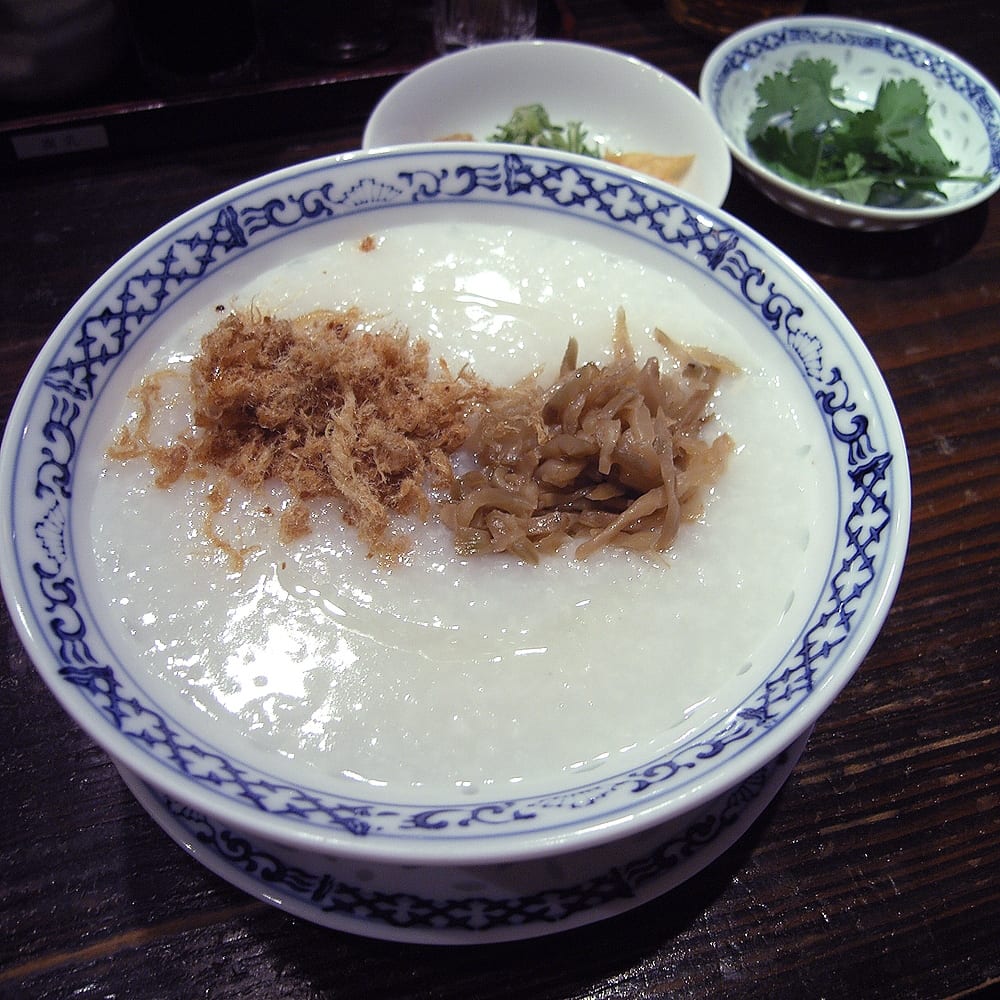
Kinmen Cantonese Congee is a Kinmen-style breakfast porridge cooked until the rice completely dissolves into a milky broth; Yongchun Cantonese Congee, run by the same family since the founder's grandfather's generation, has three generations and over 80 years of history, with its shop standing on Mofan Street, built in 1924. At six in the morning on Juguang Road, queues already form outside Yongchun, Shouji, and the stalls near the old market — a steaming bowl arrives with fish balls, meatballs, pork liver, and lean pork hidden in the broth, served with a freshly fried you tiao on the side. Kinmen locals say you haven't truly visited Kinmen until you've had this congee.
Yongchun Cantonese Congee has been run by the same family since the founder's grandfather's generation, spanning three generations and more than 80 years. The shop sits on Mofan Street, a T-shaped brick-arcade street built in 1924 with overseas Chinese funding raised by Kinmen Chamber of Commerce chairman Fu Xiqi on the former site of Koxinga-era military training grounds — named “Mofan” (Model) Street for its neat, exemplary streetscape.
What is Kinmen Cantonese Congee
Kinmen Cantonese congee is made in a way similar to Guangdong's "sheng gun" (raw-stir) porridge, but taken to a more extreme result: the rice is cooked until you "see broth but no rice" — completely dissolved into a milky white liquid with no visible grains, thick enough that even a spoonful lifted from the bowl looks like dense rice slurry. Toppings are blanched to order — fish balls, meatballs, pork liver, lean pork, shrimp balls, egg drops — then finished with scallion and white pepper, and served with sliced you tiao for dipping.
Why does it represent Kinmen? Early Kinmen absorbed Cantonese and Hokkien food traditions along with the ROC military presence. Local cooks adapted the Cantonese sheng gun porridge into a richer, smoother Kinmen version that spread through military breakfast culture. Yongchun Cantonese Congee has operated for three generations; cooking the rice until it completely dissolves is a technical threshold that sets these shops apart. Shoují, Yongxiang, and the old-market stalls form a breakfast cluster; the you tiao accompaniment is a Kinmen standard — a completely different logic from congee on the main island.
How to eat it the local way
Local knowledge
Verified facts (sponsored content filtered)
- The Kinmen Daily features it in a dedicated article as "Kinmen people's favorite" breakfast; additionally recognized by the Kinmen County Tourism Bureau.
- Yongchun Cantonese Congee has been operated for three generations; cooking the rice until "you see broth but no rice" is the technical benchmark for authentic Kinmen-style congee.
- Jincheng's Mofan Street and the area around the Qiu Lianggong Mother's Chastity Arch form a breakfast cluster, with Shoují, Yongchun, and old-market stalls all in the vicinity.
Visitor tips
- Most shops operate from around 6 a.m. to noon; on weekends they often sell out before noon — arrive before 9 a.m. to be safe.
- Parking in Jincheng is difficult; consider leaving the car at the public lot near the Qiu Lianggong ancestral residence and walking into the old-street breakfast area.
- The congee is thick and scalding; adding too much white pepper at once can irritate the throat — season gradually.
Data compiled from the Kinmen County Tourism Bureau, Kinmen Winery, and a large volume of public reviews, with sponsored content filtered out.
Frequently Asked Questions
How many generations has Yongchun Cantonese Congee been run?
It has been run by the same family since the founder's grandfather's generation, spanning three generations and more than 80 years.
When was Kinmen's Mofan Street built?
Mofan Street was built in 1924 with overseas Chinese funding raised by Kinmen Chamber of Commerce chairman Fu Xiqi, on the former site of Koxinga-era military training grounds.
Why is it called “Mofan” (Model) Street?
Because its neat, exemplary streetscape made it a model for street architecture, chairman Fu Xiqi named it “Mofan Street.”
What's the authentic way to eat Kinmen Cantonese congee?
The local way is to soak sliced you tiao (fried dough) in the congee until it absorbs the broth — that salty, savory combination is the authentic experience.
Sources
- 永春廣東粥 | 金門觀光旅遊網 — 永春廣東粥三代、80餘年經營歷史(金門縣官方觀光網)
- 模範街 - 維基百科 — 模範街1924年由傅錫琪集資興建、鄭成功內較場舊址沿革