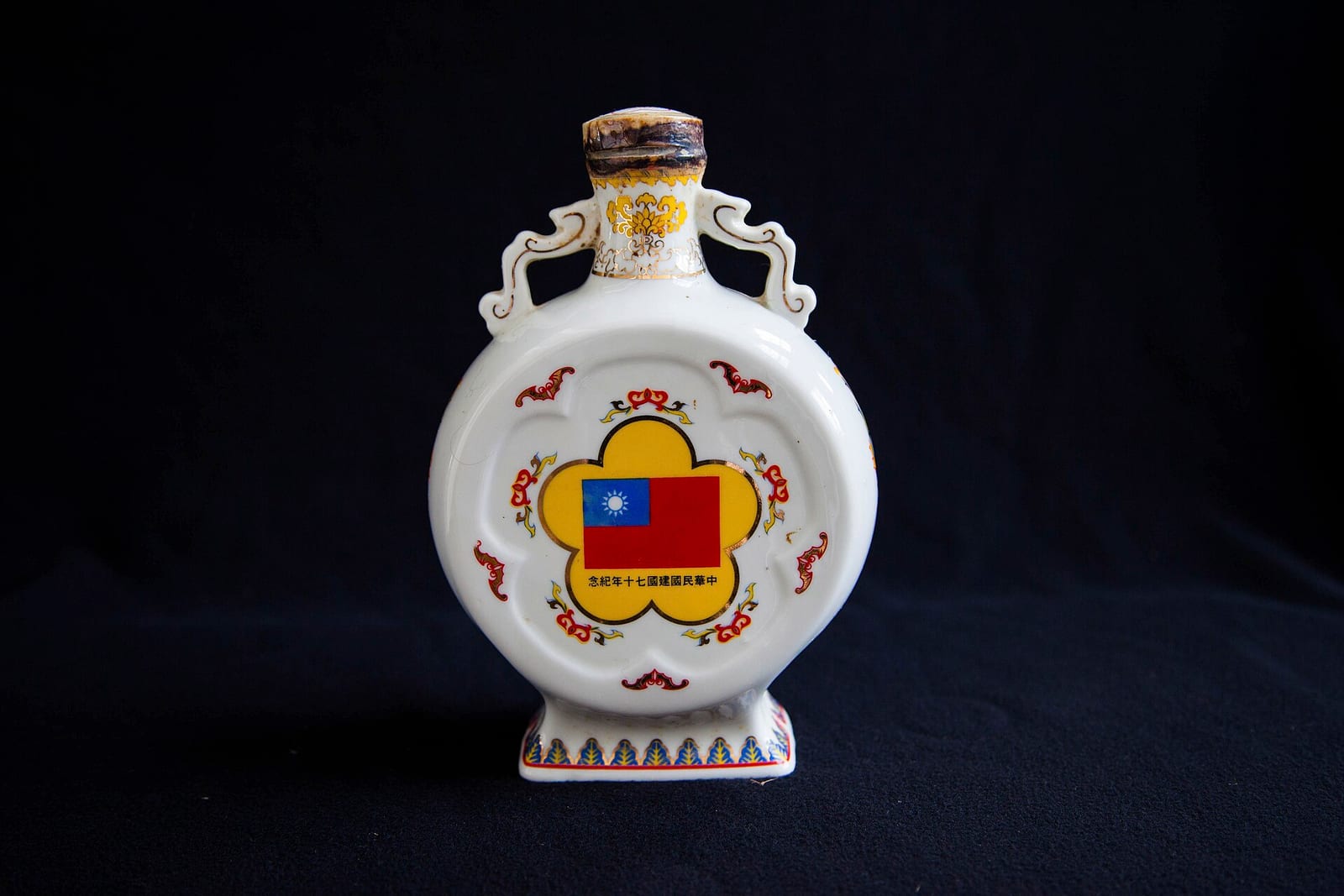
Kinmen Kaoliang Liquor is a light-aroma (qingxiang) Chinese baijiu produced by the Kinmen Winery, whose predecessor, the Jiulongjiang Distillery, was established in 1952 on the order of Kinmen Defense Command commander General Hu Lian and renamed Kinmen Winery in 1956. Step into the winery compound and the air is thick with the scent of spent grain; crocks of kaoliang rest quietly in the constant temperature of granite tunnels — for Kinmen residents, this is more than liquor, it is over six decades of the island's economic lifeblood and a permanent scent memory at the family table.
The Kinmen Winery began as the Jiulongjiang Distillery, established in 1952 on the order of Kinmen Defense Command commander General Hu Lian; it began full production on February 1, 1953, and was renamed Kinmen Winery in 1956 after the Fujian provincial government relocated to Taiwan. Ye Huacheng, who laid the technical foundation, had already distilled Kinmen's first batch of kaoliang at his own Jincheng Distillery in 1950; his former residence now houses the Kinmen Kaoliang Liquor History Hall, opened to the public in 2009.
What is Kinmen Kaoliang Liquor
Kinmen Kaoliang belongs to the "light-aroma" (qingxiang) category of Chinese baijiu. The main ingredient is drought-grown sorghum from Kinmen, fermented with wheat-based qu starter and underground granite-filtered water, then distilled and aged in granite tunnel cellars. The most emblematic expression is the 58-proof daqü baijiu — the aroma is clean and crisp rather than harsh, the palate is fiery yet finishes sweet, standing alongside Sichuan's nong-xiang and Guizhou's jiang-xiang as one of three pillars of Chinese baijiu.
The Kinmen Winery was founded in 1952 by General Hu Lian, initially to address the livelihood needs of soldiers and civilians and supply liquor to the military. It later became a county-run public enterprise, and its profits have long supported Kinmen's social welfare spending. Ye Huacheng established the technical foundation for the distilling process; the traditional method of "winter fermentation, summer distillation" is still in use today. The constant temperature and humidity of the granite tunnels naturally soften the spirit during aging — a geological advantage that cannot be replicated elsewhere.
How to drink it the local way
Local knowledge
Verified facts (sponsored content filtered)
- The Kinmen Winery was founded in 1952 as a county-run public enterprise; its profits have long supported social welfare programs in the county.
- Ye Huacheng is regarded as the founding figure of Kinmen kaoliang; the traditional "winter fermentation, summer distillation" method remains the Kinmen Winery's standard practice.
- The 58-proof daqü baijiu is the winery's most iconic expression and the permanent top entry on every Kinmen souvenir list.
Visitor tips
- The Jinning and Jinsha winery facilities are open for visits, but the granite tunnel cellars are restricted areas — access requires joining a guided tour.
- Aged expressions are scarce and purchase limits are common at the store; avoid visiting around public holidays and the period surrounding the Kinmen Marathon.
- Kaoliang has a high alcohol content — please do not drive after tasting. Drunk-driving enforcement across Kinmen is strict.
Data compiled from the Kinmen County Tourism Bureau, Kinmen Winery, and a large volume of public reviews, with sponsored content filtered out.
Frequently Asked Questions
When did Kinmen Kaoliang Liquor production begin?
The winery's predecessor, the Jiulongjiang Distillery, was established in 1952 on the order of General Hu Lian and began full production on February 1, 1953.
When was the winery renamed Kinmen Winery?
It was renamed Kinmen Winery in 1956 after the Fujian provincial government relocated to Taiwan.
Who laid the technical foundation for Kinmen Kaoliang?
Ye Huacheng is regarded as the founding technical figure; he distilled Kinmen's first batch of kaoliang at his own Jincheng Distillery as early as 1950.
Where is the Kinmen Kaoliang Liquor History Hall?
It occupies Ye Huacheng's former residence next to the old Kinmen Winery in Jiucheng, and opened to the public in 2009.
Sources
- 走過70載 - 認識我們 - 金門酒廠實業股份有限公司 — 金門酒廠1952年創立、1953年量產、1956年更名官方沿革
- 葉華成 - 維基百科 — 葉華成生平、1950年釀酒、故居2009年闢為酒史館