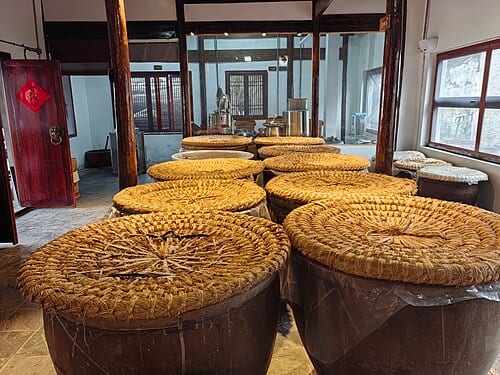
Shaoxing wine is a Chinese-style yellow rice wine fermented from glutinous rice and wheat qu, amber in colour with a warm, mellow sweetness. Puli, in Nantou, has been known as the hometown of Taiwan's Shaoxing wine since the Japanese colonial era, thanks to its exceptional water. In the Puli basin, the mountains are good and the water is good — even the air carries a faint sweetness; step inside the winery and rows of aged jars sit quietly, the mellow fragrance of fermenting rice filling the air.
According to Taiwan Tobacco and Liquor Corporation's official history, the Puli Winery's predecessor, the Puli Sake Brewing Company, was established in 1917, and it successfully brewed and marketed Shaoxing wine using local Ailan spring water in 1952 — establishing Puli as Taiwan's leading Shaoxing wine producer. Per the Chinese Wikipedia entry, the winery's aged Shaoxing wine won a gold medal at a Greek international food competition in 1988, and Taiwan's first liquor culture museum opened at the site in 1996.
What is Shaoxing Wine?
Shaoxing wine is a huangjiu — a yellow rice wine — fermented from glutinous rice and wheat qu. The liquor is amber, warm-bodied, and richly aromatic with a lingering sweetness. In Taiwan, Puli has long been called "the hometown of Shaoxing wine," earning that reputation through the outstanding water quality of the Puli basin and becoming the most representative production site for Taiwan-style Shaoxing wine.
The Puli Winery was established in 1917 and successfully produced Shaoxing wine in 1952, earning the brand its name. Today the winery is more than a producer — it has extended the Shaoxing character into everyday flavours through a line of "Xing"-branded foods such as Shaoxing sausages and Shaoxing wine-marinated eggs, making it the most iconic state-run tourist winery landmark in the area.
How to drink it the authentic way
Local knowledge
Verified facts (sponsored content excluded)
- The Puli Winery's establishment in 1917 and its successful Shaoxing wine production in 1952 are recorded facts in Taiwan Tobacco and Liquor Corporation's official history.
- Puli's title of "hometown of Shaoxing wine" and its associated "Xing"-branded products — including Shaoxing sausages and Shaoxing wine-marinated eggs — are widely recognized local specialties.
- The Taiwan Tobacco and Liquor Corporation's Puli Tourist Winery is a state-run tourist landmark. This guide is organized by product; the anchor point is for location reference and future on-site photography only.
Visitor tips
- The winery has a tourist area and a shop. For purchasing Shaoxing wine, products in official TTL packaging offer greater assurance of authenticity.
- You must be at least 18 years old to consume alcohol. Never drink and drive. Taste in moderation.
- Coordinates are approximate field-survey values. The winery's location and opening hours should be confirmed on-site or via official announcements.
Information compiled from the Nantou County Government tourism resources and local township farmers' associations. Sponsored content has been excluded.
Frequently Asked Questions
What is Shaoxing wine?
Shaoxing wine is a yellow rice wine fermented from glutinous rice and wheat qu, amber-coloured with a mellow, lingering sweetness.
Why is Puli called the hometown of Taiwan's Shaoxing wine?
Because the Puli basin's exceptional water enabled the Puli Winery to successfully brew Shaoxing wine in 1952, establishing its reputation.
When was the Puli Winery founded?
Its predecessor, the Puli Sake Brewing Company, was established in 1917 during the Japanese colonial era by local community leaders.
How else is Shaoxing wine used besides drinking?
Locally it's cooked into food — Shaoxing sausages, wine-marinated eggs, and drunken chicken are all common "Xing"-branded dishes.
Sources
- 日月潭國家風景區管理處《埔里酒廠》 — 埔里酒廠1917年成立沿革
- 台灣菸酒股份有限公司 埔里酒廠《關於我們》 — 官方沿革與1952年紹興酒試製成功
- 維基百科《埔里酒廠》 — 1988年金質獎、1996年酒文物館等沿革細節