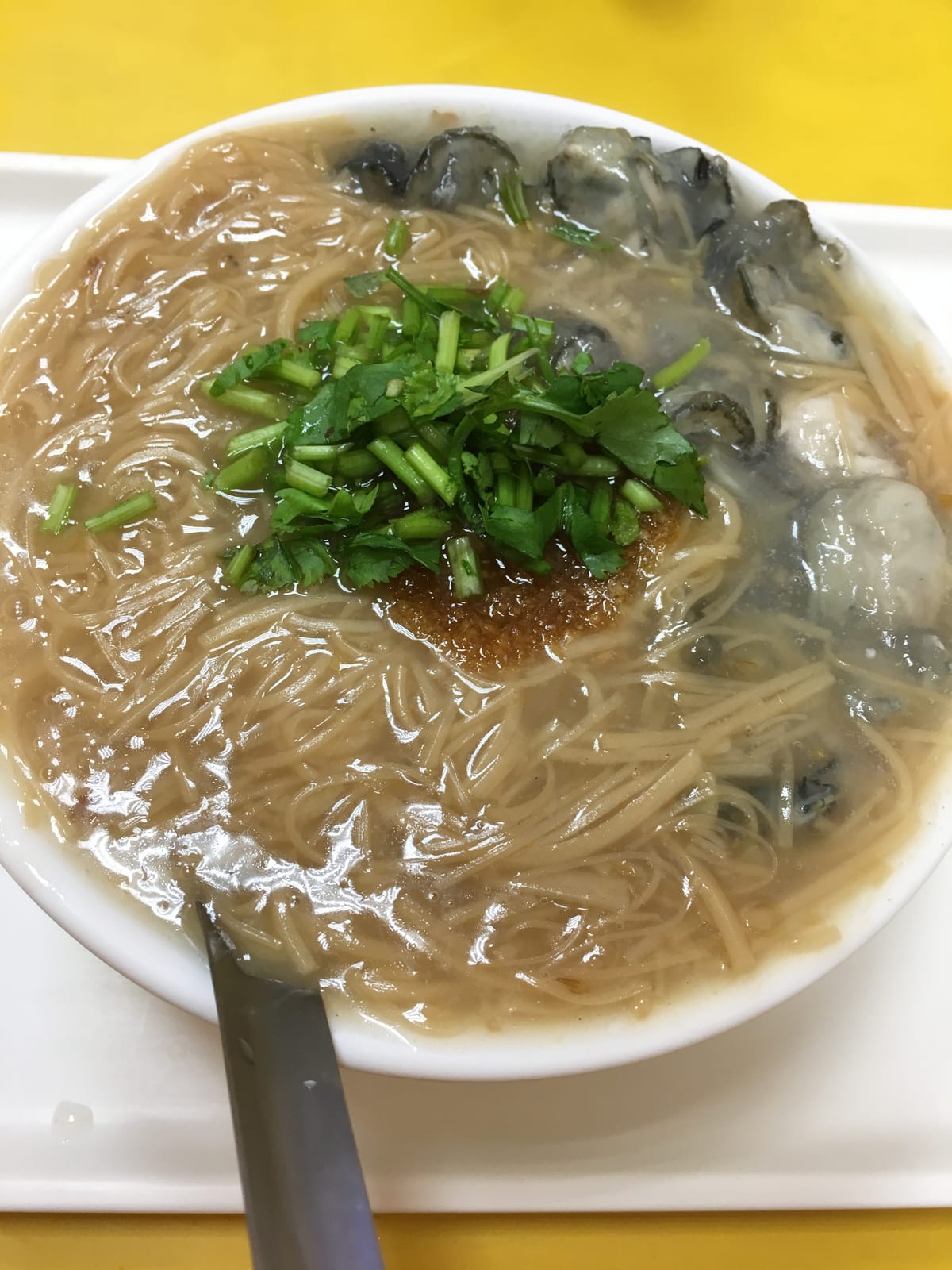
Dongshi Oyster Vermicelli Noodles is a signature dish from the coastal area around Dongshi Township, Chiayi County, made with same-day live oysters simmered in a pork-bone and oyster-liquor broth thickened with sweet potato starch. The oysters are large and naturally sweet, needing no dipping sauce to showcase their flavor. Sheltered by the offshore Wai San Ding Zhou sandbar, Dongshi is home to Taiwan's largest oyster-washing and processing operations; Chiayi County's annual oyster output accounts for nearly half of the nation's total, with Dongshi the highest-producing township within the county, and most stalls around the harbor are run by oyster-farming families themselves.
Chiayi County's annual oyster production is about 8,521 metric tons, accounting for roughly 47% of Taiwan's national total, with a value of more than NT$1.5 billion — the highest oyster production and value of any county in Taiwan. Sheltered by the offshore Wai San Ding Zhou sandbar, Dongshi Township is the highest-producing township within the county and hosts the largest oyster-washing and processing facilities in Taiwan; oyster farmers from neighboring Budai often send their catch to Dongshi for washing, shucking, and sale. Nationwide, Taiwan's annual oyster output is about 18,000 metric tons, worth roughly NT$3.9 billion.
What Are Oyster Vermicelli Noodles (Dongshi Style)
The noodle broth is built from pork bones and oyster liquor, thickened with sweet potato starch to a dense, smooth consistency. The bowl is finished with freshly blanched live oysters, cilantro, and a small amount of ginger shreds for fragrance and to balance any fishiness. The Dongshi version's defining characteristic is oysters that are large, free of any muddy smell, and springy with a natural sweetness — the seafood flavor speaks for itself without needing garlic paste. The overall texture falls somewhere between a thick broth and congee, rich without being heavy.
Oyster farming in Dongshi Township has a history of more than a hundred years. Farmers primarily use nearshore stick-and-bag cultivation, growing oysters on the abundant plankton along the Budai coastline. Most vendors around the fishing harbor are oyster-farming families who also run food stalls — not a packaged tourist operation. Supply runs mainly from the morning market through the afternoon, with the pace of service following the catch. The peak season runs from November through March of the following year, when the oysters are at their fattest and the broth is sweetest.
How to Eat It the Local Way
Local Knowledge
Verified Information
- Dongshi Township's oyster production ranks among the highest in Taiwan, making it one of the country's most important oyster-producing areas.
- Live oysters are used directly from the harbor — the time from harvest to pot is minimal, and the freshness is significantly better than imported or city versions.
- Budai Harbor Seafood Market is also a viable alternative nearby, with oyster vendors supplied from the same adjacent waters.
Visiting Tips
- Dongshi Fishing Harbor operates primarily as a working food-stall environment, not a packaged tourist attraction. You will need to look for stalls yourself — asking locals for directions is recommended.
- In summer (June through September) water temperatures are high and oysters are leaner; some vendors reduce hours or temporarily close.
- Parking is limited; on weekends, consider taking a shuttle or arriving early.
Sources: Dongshi Township, Chiayi County fishery records; on-site field notes.
Frequently Asked Questions
How does Chiayi County rank nationally for oyster production?
Chiayi County produces about 8,521 metric tons of oysters a year, roughly 47% of Taiwan's national total, ranking first in both production volume and value.
Why are Dongshi's oysters especially fresh?
Most stalls around Dongshi Fishing Harbor are run by oyster-farming families themselves, so the time from harvest to pot is minimal, and Dongshi is also home to Taiwan's largest oyster-washing and processing hub.
What is the best season to eat Dongshi oyster noodles?
The peak season runs from November through March, when the oysters are at their fattest and the broth is sweetest; in summer (June–September), higher water temperatures leave oysters somewhat leaner.
Sources
- 嘉義東石蚵產業亮起來 牡蠣殼的「鍍金」術 — 嘉義縣蚵仔年產量8,521公噸、占全國47%、產值15億元;東石為最大牡蠣產地與最大洗蚵場