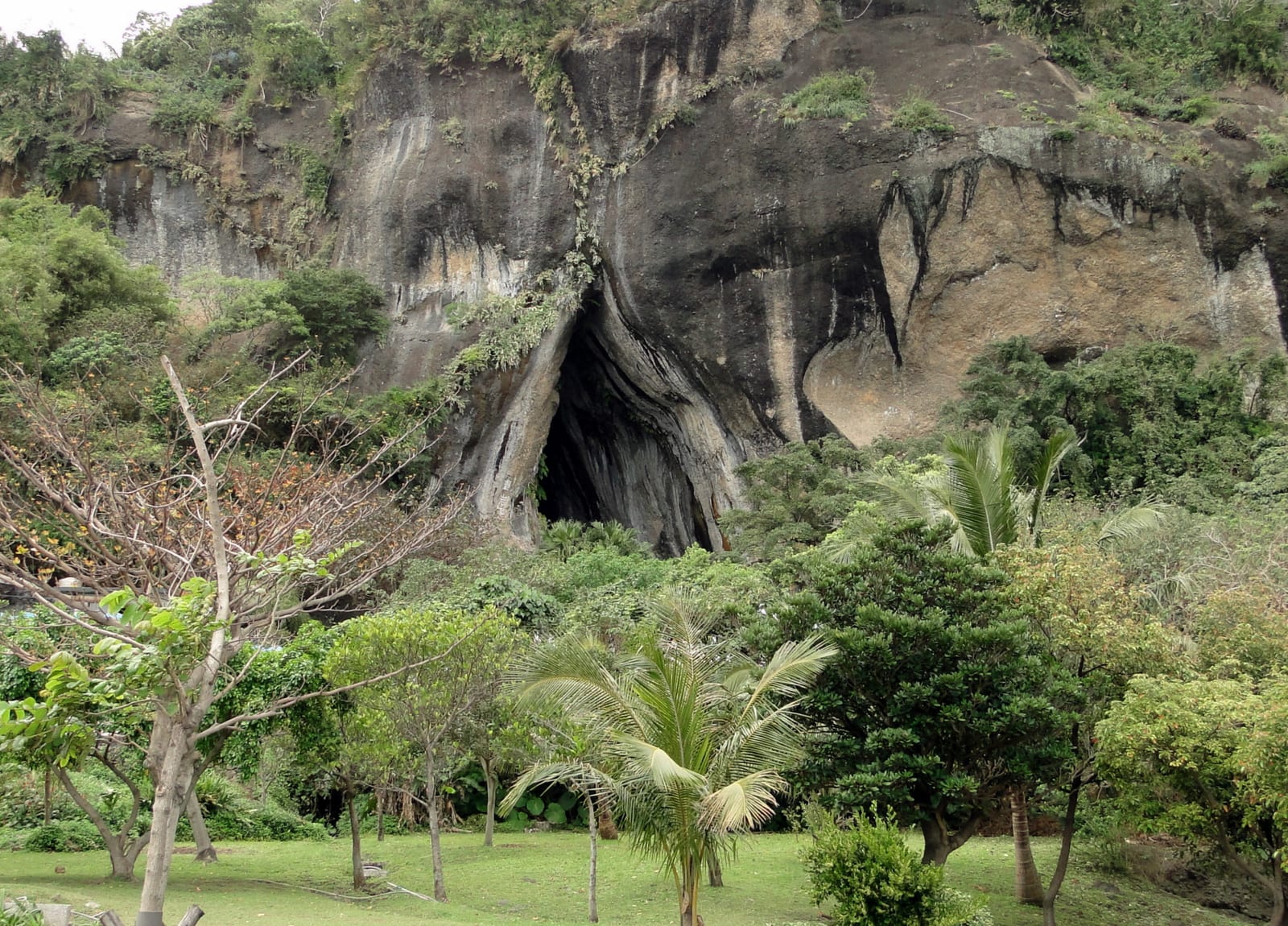
Changbin Culture Site (Baxian Caves) is a cluster of natural sea caves on the coastal cliffs of Changbin Township, Taitung, discovered in 1968 by National Taiwan University geologist Lin Chao-chi. Excavations led that year by NTU archaeologist Sung Wen-hsun uncovered stone and bone tools dating back roughly 15,000 to 30,000 years, representing the culture later named the Changbin Culture — Taiwan's earliest known prehistoric remains. The site is now a National Grade 1 Historic Site.
Baxian Caves were discovered in 1968 by NTU geologist Lin Chao-chi. Excavations led that year by NTU archaeologist Sung Wen-hsun uncovered chipped stone tools, bone implements, and shell midden deposits dating back roughly 15,000 to 30,000 years, confirmed as Late Paleolithic remains. The site was designated a National Grade 1 Historic Site in 1988 and redesignated a National Site by the Council for Cultural Affairs on May 1, 2006; it is now administered by the Bureau of Cultural Heritage, Ministry of Culture.
Highlights of the Changbin Culture Site
Baxian Caves are located beside the coast of Highway 11 in Zhangyuan Village, Changbin Township. Several sea caves of varying sizes are distributed across the reef cliff face, connected by wooden boardwalk trails. The geological origin is erosion of limestone layers by ancient seawater. As the sea retreated, the caves were left suspended several meters to tens of meters above the current sea surface, forming a typical marine terrace landform. The site is a National Grade 1 Historic Site administered by the Ministry of Culture.
In 1968, archaeologist Song Wenxun from National Taiwan University excavated chipped stone tools, bone implements, and shell midden deposits from these caves, confirming them as Late Paleolithic remains. The Changbin Culture people lived by gathering, fishing, and hunting, had not yet developed agriculture, and were active here from approximately 15,000 to 5,000 years ago. Parts of some cave interiors are enclosed in glass, allowing visitors to observe the stratigraphic profile on the cave walls and experience the spatial scale of the archaeological site firsthand.
Tips for Getting the Most Out of Your Visit
Practical Information
Getting There & Time
- Located at kilometer 133 of Highway 11, approximately 1 hour by car from Taitung City. No direct bus service — self-driving or renting a scooter is recommended.
- The site is open all day. Morning or late afternoon is recommended to avoid the intense midday sun. Trails can be slippery after rain — wear non-slip shoes.
Nearby Connections
- Can be combined with Changbin Township's Jingang Boulevard and Zhangyuan Beach into a single itinerary, heading south along Highway 11 to connect with Sanxiantai in Chenggong Township.
- Changbin town center has local snacks for resupply; Chenggong Township is about 20 minutes away by car with more resupply options.
Source: Cultural Heritage Bureau, Ministry of Culture; Song Wenxun archaeological excavation report (1969).
Frequently Asked Questions
When were Baxian Caves discovered?
They were discovered in 1968 by NTU geologist Lin Chao-chi, and archaeological excavation began the same year under Sung Wen-hsun.
What does the Changbin Culture represent?
It is Taiwan's earliest known prehistoric culture, with artifacts dating back roughly 15,000 to 30,000 years from the Late Paleolithic.
What heritage status does the site hold?
It was designated a National Grade 1 Historic Site in 1988 and redesignated a National Site in 2006, now managed by the Ministry of Culture.
Sources
- 八仙洞考古遺址|國家文化資產網 — 古蹟指定年份與遺址概況
- 發現八仙洞遺址 中研院士宋文薰辭世|中國時報 — 1968年發掘事蹟