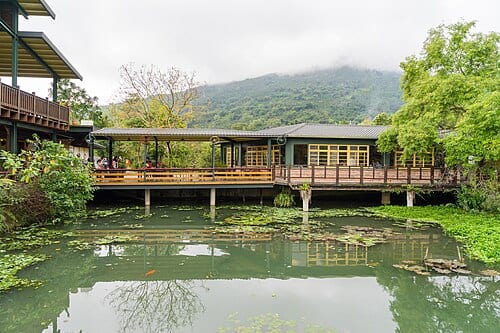
Mataian Wetland (Lasuei Ecological Park) is a natural marsh wetland beside Mataian village at the foot of Maxi Mountain in Guangfu Township, Hualien County; the Guangfu Township Office's official data lists the park's area at about 12 hectares, making it one of the largest ecological wetlands in Hualien County. The wetland is known for the Amis people's traditional "Palakaw" composite fishing method, and lotus flowers bloom each summer, roughly June to August.
Mataian Wetland Ecological Park covers about 12 hectares according to the Guangfu Township Office's official data, situated at the foot of Maxi Mountain in Guangfu Township, Hualien County — one of the largest natural marsh wetlands in Hualien County, rather than in Taiwan as a whole. "Mataian" is an Amis word for the tree bean, a legume plant the community regarded as auspicious and planted widely, giving the area its name. The park is known for the traditional Amis "Palakaw" composite fishing method, an Amis term meaning "a pond where fish and shrimp can live" — a traditional trap-fishing technique that raises fish before catching them.
Highlights of Mataian Wetland
"Mataian" is an Amis word meaning the tree bean (a legume plant), reflecting the close relationship between the community and the plants of the land. The wetland lies adjacent to the village and has long been an important resource area for the community. The traditional Amis "Palakaw" fishing method is the most representative ecological knowledge associated with this site. It involves constructing a composite fish habitat from bamboo tubes, wooden branches, and bundles of rice straw to simulate the bottom-dwelling environment of a water body, attracting fish to settle inside. The entire structure is then lifted out of the water to harvest the fish — a traditional fishing technique with a comparatively low impact on wetland ecology.
The wetland supports a rich variety of plant life, with lotus flowers, water hyacinths, water chestnuts, and other floating-leaf plants appearing in seasonal succession. From June to August, the lotus blooms transform the park's ponds into one of the Rift Valley's most popular seasonal attractions. Water birds such as grey herons and little egrets are present year-round, and in summer various dragonfly and frog species are active around the wetland edges. Please follow the park's rules during your visit — do not pick plants or enter areas outside the designated trails, in order to protect the wetland ecosystem.
Tips for Getting the Most Out of Your Visit
Practical Information
Getting There & Time
- Located along Maxi Mountain Road in Guangfu Township. About a 5–10-minute drive from Taiwan Railways Guangfu Station; approximately 50 minutes from Hualien City.
- The park has a parking area. For opening hours and guided tour arrangements, check in advance with the Mataian community or the Hualien County Tourism Bureau.
- Allow 1.5 to 2 hours; summer lotus viewing plus the ecological trail can extend to 2.5 hours. Insect repellent is essential for a wetland visit.
Nearby Connections
- About 10 minutes by car from Guangfu Sugar Factory — a natural combination of a wetland ecology morning and a sugar factory ice cream afternoon for a Guangfu Township half-day.
- Some community members in Mataian run food service offering traditional Amis cuisine. Check before visiting whether table reservations are available.
Sources: Hualien County Tourism Bureau; publicly available materials from the Mataian Community Cultural Development Association.
Frequently Asked Questions
How large is Mataian Wetland?
The Guangfu Township Office's official data lists the park's area at about 12 hectares, one of the largest ecological wetlands in Hualien County.
What does "Mataian" mean?
"Mataian" is an Amis word for the tree bean, a legume the community regarded as auspicious and planted widely across the land.
What is the Palakaw fishing method?
Palakaw is a traditional Amis trap-fishing technique that raises fish before catching them; the Amis term means "a pond where fish and shrimp can live."
Sources
- 馬太鞍濕地 - 光復鄉公所 — 官方資料:園區面積約12公頃
- 魚兒的育嬰房—>巴拉告Palakaw - 農業部農村發展及水土保持署 — 巴拉告捕魚法定義與阿美語意義