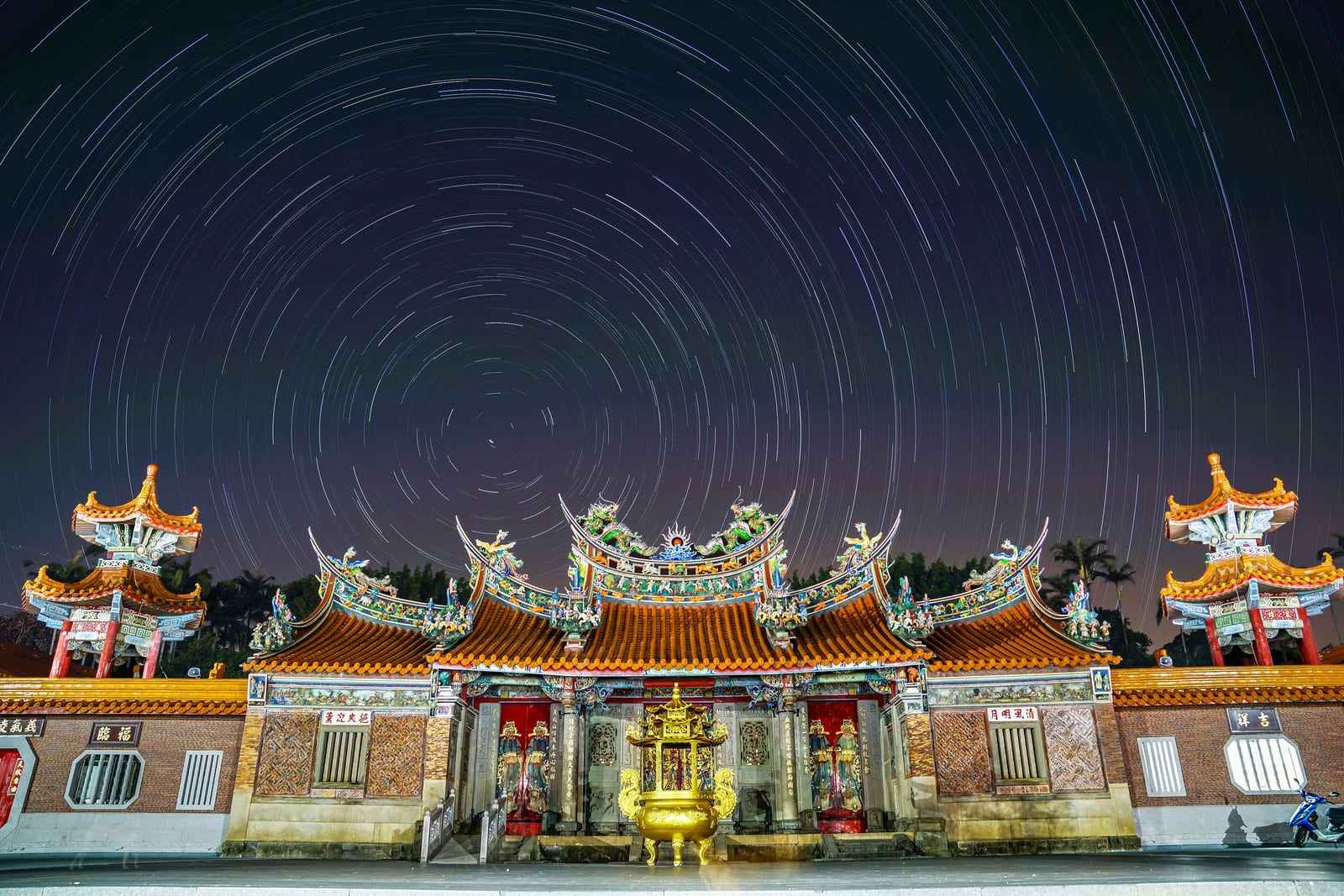
Fangliao Yimin Temple (officially Baozhong Ting Yimin Temple) is a temple in Xinpu Township, Hsinchu County, dedicated to the spirits of Hakka militia who died defending against the Lin Shuangwen Uprising (1786-1788). The burial mound and temple were completed in the 55th year of the Qianlong reign (1790), and the site is now a county historic site. Each year in the seventh lunar month, the Yimin Festival is hosted on a rotating basis by Hakka communities across Taoyuan, Hsinchu, and Miaoli, a grand event that stands as the most important annual religious occasion for the Hakka people.
The Yimin burial mound holds the remains of nearly 300 Hakka militia who died during the Lin Shuangwen Uprising (Qianlong 51-53, 1786-1788), and the temple was completed in the 55th year of the Qianlong reign (1790). The Qianlong Emperor issued an imperial edict praising the militia's loyalty with the honorific 'Baozhong' (Upholding Loyalty), giving the temple its formal name, Baozhong Ting Yimin Temple. It is now a county historic site, and the annual Yimin Festival around the 20th day of the seventh lunar month is registered as a nationally significant folk custom, hosted on a rotating basis by more than a dozen Hakka communities including Xinpu, Qionglin, Hukou, and Guanxi.
What to see at Fangliao Yimin Temple
The temple's history is rooted in the hardships of Qing-dynasty Hakka settlers opening up Taiwan. During the Lin Shuangwen Uprising (1786–1788), tensions between Hokkien and Cantonese migrants ran high, and Hakka militiamen from the Hsinchu area joined forces to help the Qing court suppress the rebellion. The remains of those who died in battle were gathered and enshrined here, giving rise to a distinctive form of collective martial spirit veneration. The temple has been restored across generations; the current layout preserves a traditional Hokkien-Cantonese temple style, with a wide forecourt.
The Yimin Festival (around the 20th day of the seventh lunar month) is one of the most representative events in Hakka culture. Hosted on a rotating schedule by eighteen districts including Xinpu, Qionglin, Hukou, and Guanxi, the rituals of offering sacred pigs and paying homage to the Yimin have continued for hundreds of years. The temple is also open to pilgrims and visitors on ordinary days; the Yimin Culture Hall provides further background on the historical context.
Tips for getting the most out of your visit
Practical information
Getting there and timing
- Driving is the primary option. Head from Zhubei or Hsinchu City via Provincial Highway 1 toward Xinpu; parking is available next to the temple. Parking space is limited during the Yimin Festival — arrive early.
- The temple is open year-round with no admission fee. Check the temple's official announcements for Yimin Culture Hall opening hours.
Nearby connections
- Xinpu's autumn and winter persimmon season pairs well with a temple visit; heading north along Provincial Highway 1 brings you to Hukou Old Street.
- Beipu Old Street in Hsinchu County is to the south — a half-day round trip between the two is manageable.
Sources: The Wikipedia entry for Xinpu Fangliao Yimin Temple and Hsinchu County Government cultural heritage records.
Frequently Asked Questions
What is Fangliao Yimin Temple's official name?
Its official name is Baozhong Ting Yimin Temple, named for the 'Baozhong' honorific granted by the Qianlong Emperor; 'Fangliao Yimin Temple' is the local common name.
What event does the temple commemorate?
It honors the Hakka militia who died during the Lin Shuangwen Uprising (1786-1788); the burial mound holds the remains of nearly 300 militia members.
When was the temple completed?
The burial mound and temple were completed in the 55th year of the Qianlong reign (1790).
How is the Yimin Festival organized?
It is held around the 20th day of the seventh lunar month and hosted on a rotating basis by more than a dozen Hakka communities including Xinpu, Qionglin, Hukou, and Guanxi; it is registered as a nationally significant folk custom.
Sources
- 褒忠亭義民廟 — 維基百科條目,含建廟沿革與義民祭資訊
- 新埔枋寮義民廟與義民信仰活動/范明煥 — 吳三連台灣史料基金會,歷史背景考據