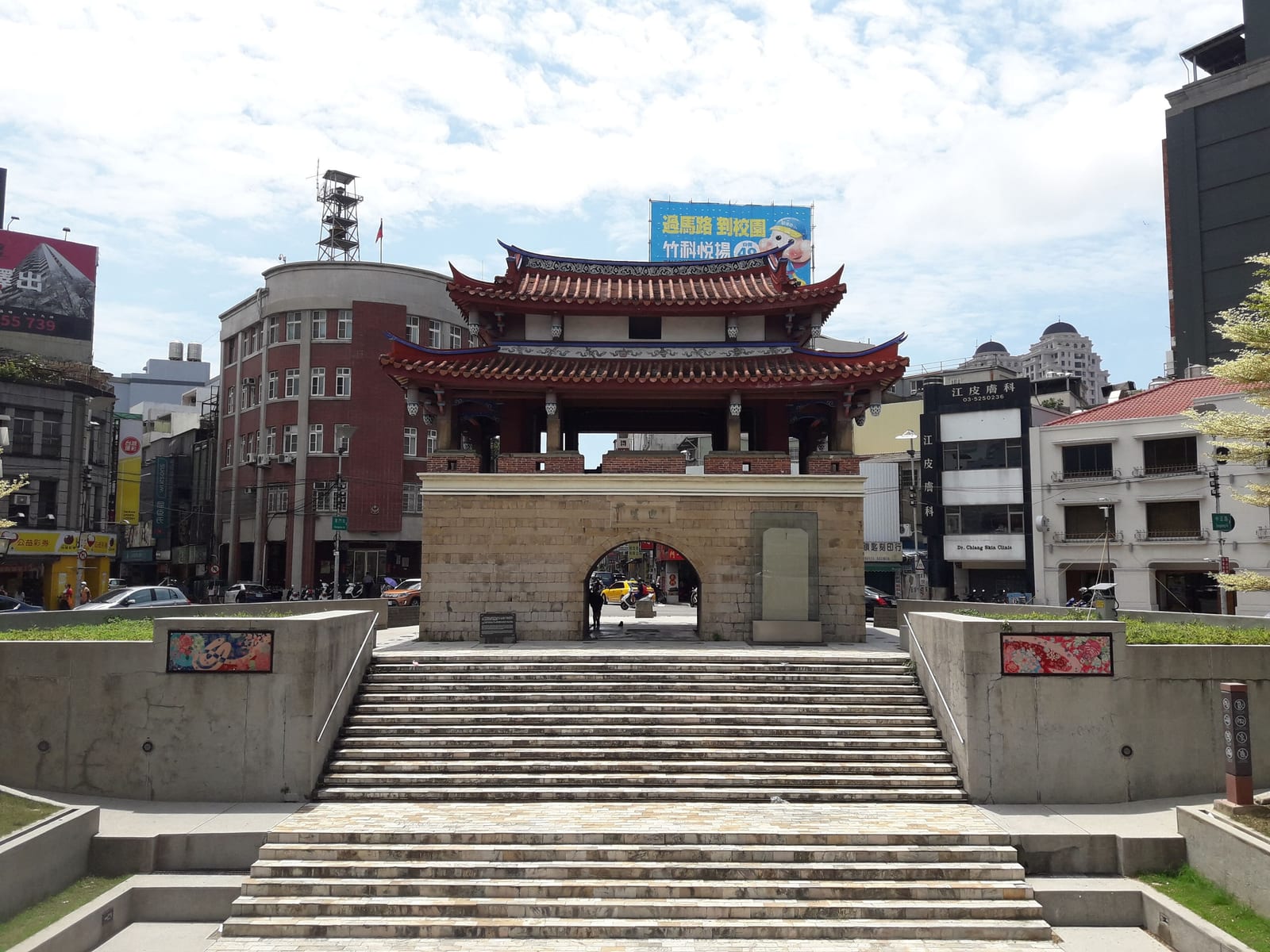
East Gate (Yingxi Gate) is the only surviving gate of Zhuqian City's original four, located in Hsinchu City's East District. Built between the 7th and 9th years of the Daoguang reign (1827-1829), it was designated a national historic site in 1985 (formerly graded a first-class historic site before the 1997 revision of the Cultural Heritage Preservation Act). The gate features a three-arch gateway tower and stands as an important example of Qing-dynasty defensive architecture for flatland cities in Taiwan, and its surrounding moat has since been redeveloped into an ecology park.
Yingxi Gate was built between the 7th and 9th years of the Daoguang reign (1827-1829). It was first designated a historic site by Japanese colonial authorities in 1935, then redesignated a national historic site under Taiwan's Cultural Heritage Preservation Act in 1985 (formerly graded as a first-class historic site). It is the only one of Zhuqian City's original four gates still standing, as the other three gates and the city wall were demolished during a 1902 Japanese-era urban redevelopment project.
What to see at East Gate (Yingxi Gate)
When Zhuqian City was first walled it was an earthen fortification; it was rebuilt in stone during the Daoguang era. Yingxi Gate is the east gate, oriented toward the rising sun — hence the name 'Yingxi' (welcoming the dawn). The existing gate is a two-story tower: the lower level has three brick-and-stone arched openings, while the upper level is a timber-framed tile-roofed gatehouse — a precious surviving example of Qing-era Han Chinese defensive architecture in Taiwan. The moat alongside the gate once served a defensive function and has since been converted into an ecological waterway with aquatic plants along the banks.
A pedestrian path runs along the moat park, a daily walking route for Hsinchu residents. At night the gate is lit up, and the light playing on the brickwork creates a very different atmosphere from a daytime visit. The plaza in front of the gate hosts occasional arts and cultural events.
Tips for getting the most out of your visit
Practical information
Getting there and timing
- About a 10-minute walk from TRA Hsinchu Station — a central node for walking tours of the city.
- The gate is accessible at all hours; the moat park is open year-round with no admission fee. Confirm the nightly lighting schedule before your evening visit.
Nearby connections
- Hsinchu City God Temple is about a 5-minute walk away — pair the visit with the temple food stalls for a meal.
- The moat path extends toward Hsinchu Train Station, forming a complete walking loop through the historic city center.
Sources: Historic site records from the Cultural Heritage Bureau, Ministry of Culture, and the Wikipedia entry for Zhuqian City Yingxi Gate.
Frequently Asked Questions
When was East Gate built?
It was built between the 7th and 9th years of the Daoguang reign (1827-1829) as the east gate when Zhuqian City was rebuilt in stone.
Why is East Gate the only surviving gate of Zhuqian City?
Japanese colonial authorities demolished the city walls and the other three gates during an urban redevelopment project in 1902, leaving only East Gate standing.
What historic site grade does East Gate hold?
It was designated a national historic site in 1985, a grade formerly called a first-class historic site before the 1997 revision of the Cultural Heritage Preservation Act.
What does the moat around East Gate look like today?
The moat has been redeveloped into an ecology park with a pedestrian path along its banks, a daily walking route for Hsinchu residents.
Sources
- 國定古蹟環景導覽-竹塹城迎曦門 — 文化部文化資產局官方導覽
- 竹塹城 — 維基百科條目,含建城與拆城沿革