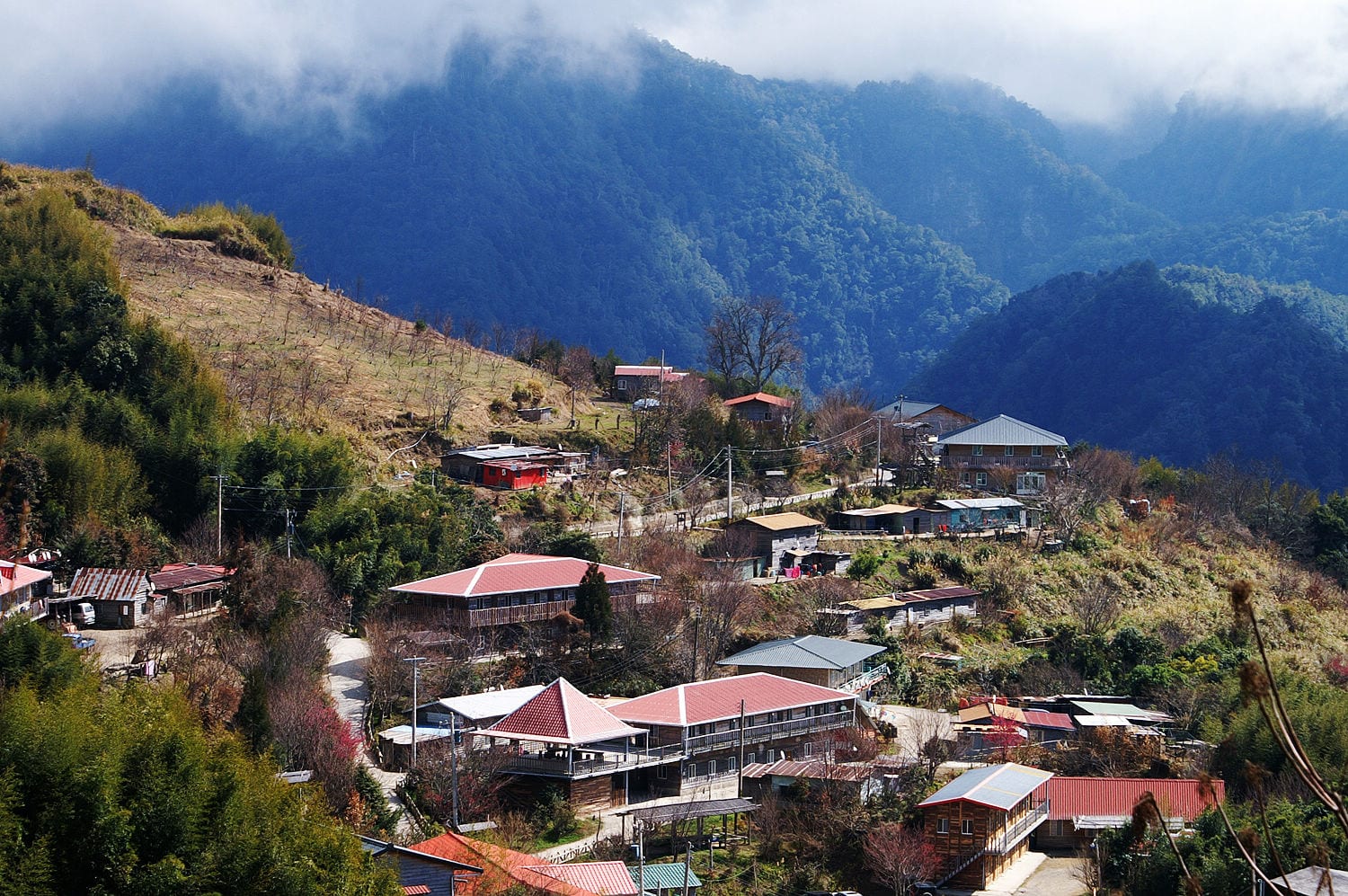
Smangus is a traditional Atayal village at an elevation of approximately 1,500 meters in Jianshi Township, Hsinchu County. A road connecting it to the outside world was not completed until 1995, and in 2004 the village formally established the land-sharing 'Tnunan Smangus' labor cooperative, a rare example of Indigenous collective economic self-governance in Taiwan. Along the Sacred Tree Trail, the largest red cypress — known to villagers as the 'Yaya Tree' or Great Elder Tree — is estimated to be about 2,500 years old, with the second-largest trunk girth of any surviving giant tree in Taiwan, making Smangus a deep-travel destination where Indigenous culture and natural ecology coexist. Please observe village protocols and the reservation system before visiting.
A road linking Smangus to the outside world opened in 1995, and in 2004 the village formally established the 'Tnunan Smangus' labor cooperative, with a tribal charter stipulating that land cannot be sold, leased, or transferred to non-members — a notable model of Indigenous collective economic self-governance in Taiwan. The largest red cypress along the Sacred Tree Trail, the Yaya Tree (also called the Great Elder Tree), is estimated at about 2,500 years old, with an original measured girth of 20.5 meters — the second-largest trunk girth of any documented giant tree in Taiwan, after the Da'anxi Sacred Tree in the Alishan area.
What to see at Smangus
Smangus is located deep in the mountains of Jianshi Township on a narrow, winding road — a single journey from Zhudong takes roughly three hours. The village is known for its 'collective farming, collective distribution' model, a notable example of indigenous community self-governance that has drawn sustained outside attention. The Sacred Tree Trail near the village passes through an old-growth cypress forest; the main grove contains several red cypress trees estimated to be over a thousand years old with trunk diameters exceeding 20 meters.
Visiting Smangus requires advance booking with the village office. The village has guesthouses and a restaurant, and staying overnight is recommended to fully experience the mountain forest at dawn and dusk and the rhythm of village life. When in the village, respect Atayal cultural customs: ask before photographing community members, and do not enter areas not open to visitors.
Tips for getting the most out of your visit
Practical information
Getting there and timing
- The entire journey is by private car. The road is a narrow, winding mountain and agricultural access road. After typhoons or heavy rainfall, confirm road conditions before setting out.
- The one-way drive from Zhudong is approximately 2.5–3 hours. Depart after daybreak. Mobile signal is weak in the mountains — download offline maps in advance.
Nearby connections
- The Beidela'man Giant Tree Trail in the same township begins from Xinle Village in a different direction; plan the two as separate trips.
- Villages such as Nalo and Xiulan in Jianshi Township can serve as rest stops along the way, with limited supplies available.
Sources: The Wikipedia entry for Smangus and official village announcements.
Frequently Asked Questions
What kind of village is Smangus?
Smangus is a traditional Atayal village at about 1,500 meters elevation in Jianshi Township, Hsinchu County, known for the land-sharing labor cooperative it formally established in 2004 — a rare example of Indigenous collective economic practice in Taiwan.
How big are the giant trees at Smangus?
The largest red cypress on the Sacred Tree Trail, the Yaya Tree, is estimated at about 2,500 years old with an original measured girth of 20.5 meters, the second-largest trunk girth of any documented giant tree in Taiwan.
What should visitors know before going to Smangus?
Smangus operates a reservation system, so visitors must confirm availability with the village office in advance; the mountain road is narrow and winding and takes about three hours to drive, and road conditions should be checked after typhoons or heavy rain.
When did the collective farming system at Smangus begin?
After the access road opened in 1995, the village gradually built the foundations for collective management, founded a village development association in 2001, and formally established the land-sharing Tnunan Smangus cooperative in 2004.
Sources
- 人人加薪、放心生養,司馬庫斯共營20年奇蹟 - 天下雜誌 — 共營制度發展歷程、1995年道路開通、2004年成立勞動合作社
- 司馬庫斯神木群步道 - 健行筆記 — 神木樹齡、樹圍數字