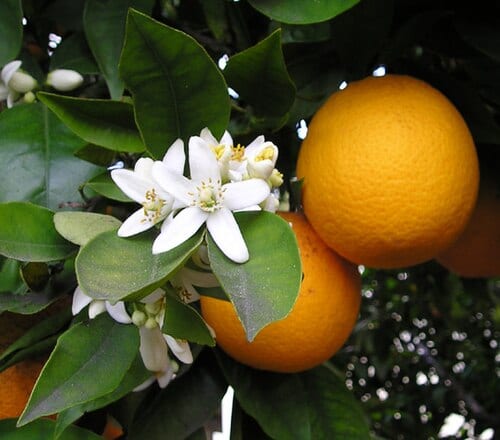
Gukeng navel oranges are the citrus fruit grown in Gukeng Township, Yunlin County, which multiple reports confirm as Taiwan's single largest navel orange growing region, with over a thousand hectares under cultivation; its national production share fluctuates by year, reported at roughly one-quarter to two-fifths. The large day-to-night temperature swings and abundant rainfall on Hebaoshan produce thin-skinned, juicy fruit, with the harvest running from November to February.
Reports from United Daily News (聯合新聞網) and others show Gukeng Township's navel orange growing area reached 1,032 hectares (2026 data), the largest in Taiwan, with annual production of over 30,000 metric tons; coverage notes roughly one in four navel oranges nationwide comes from Gukeng, while some local sources cite a share of nearly two-fifths — the discrepancy stems from differing years and metrics (area vs. output), though "Taiwan's largest producing area" is consistently confirmed across sources.
What are Gukeng Navel Oranges
Navel oranges (Citrus sinensis) belong to the sweet orange family — thin-skinned, juice-rich, and balanced between sweet and tart. Farmers in the Hebaoshan area of Gukeng began large-scale cultivation in the 1960s, selecting local varieties adapted to the mountain climate. Common ways to enjoy them include eating fresh out of hand, hand-pressing for fresh-squeezed juice, or buying processed goods such as orange cookies and orange doughnuts; the township farmers' association also carries orange jam and orange enzyme drinks.
Gukeng Township is known as the 'coffee township,' and Hebaoshan presents an agricultural landscape where coffee and navel oranges coexist — coffee grows at higher elevations while oranges concentrate on the gentler mid-slope terrain. The Yunlin County Government's Agriculture Department has confirmed that Gukeng accounts for nearly two-fifths of Taiwan's navel orange acreage. The annual winter festival draws large numbers of visitors to pick fruit directly at orchards, making it a key agri-tourism event for Yunlin County.
How to eat it like a local
Local knowledge
Verified sources
- The Yunlin County Government Agriculture Department has officially confirmed that Gukeng Township's navel orange cultivation area accounts for nearly two-fifths of Taiwan's total — an official agricultural statistic.
- The Gukeng Navel Orange Cultural Festival is held annually from November through January and is organized by the county government as a yearly agri-tourism event.
- Daijia Health Magazine and the Council of Agriculture's Agrimedia have both documented Gukeng navel oranges' industry and nutritional value.
Practical tips
- The mountain roads on Hebaoshan are winding; drivers should watch for oncoming traffic. During holiday weekends, pickers crowd the area and roadside parking is limited — follow each farm's parking guidance.
- The navel orange season runs from November to February. Fresh locally harvested fruit is nearly impossible to find outside this window, so plan your visit accordingly.
- Processed goods — orange cookies, jams — are available year-round at the Gukeng Farmers' Association or Hebaoshan agricultural specialty shops, with no seasonal restriction.
Sources: Yunlin County Government Agriculture Department, Council of Agriculture Agrimedia, Daijia Health Magazine.
Frequently Asked Questions
How significant is Gukeng as a navel orange growing region?
Gukeng Township has Taiwan's largest navel orange growing area, producing over 30,000 metric tons a year.
When is the Gukeng navel orange harvest season?
The harvest season runs from roughly November to February.
When is the Gukeng Navel Orange Cultural Festival held?
It is typically held from November through January, a key agri-tourism event for Yunlin County.
Sources
- 柳丁價格創天價歷史新高 全台最大產地雲林古坑供不應求 — 聯合新聞網:古坑柳丁種植面積與全台占比
- 雲林古坑柳丁 每台斤飆到22元 — 聯合新聞網:古坑柳丁種植面積1,032公頃、年產量數據