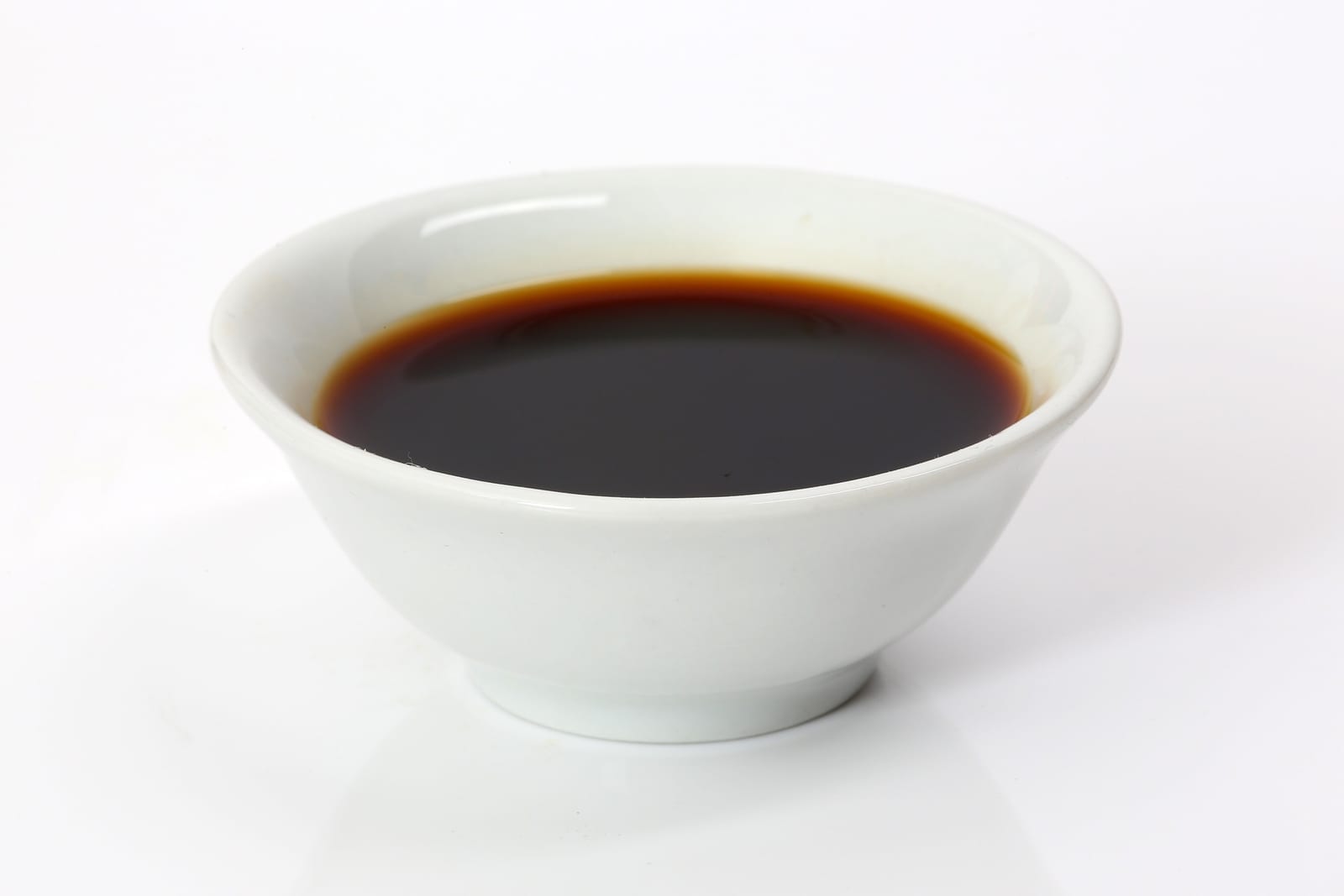
Xiluo soy sauce is a traditional Taiwanese fermented soy sauce made from black soybeans and cured in clay urns under the sun in Xiluo Township, Yunlin — a craft that has made this Zhuoshui riverside town synonymous with Taiwanese soy sauce. Along Yanping Old Street, rows of urns glow amber in the sunlight outside century-old breweries like Wan Zhuang (founded 1909) and Ruei Chun (founded 1921), and a bottle of this soy sauce underpins the flavor of braised pork rice, pan-fried fish, and blanched greens on countless family tables.
Wan Zhuang Soy Sauce was founded in 1909 (originally named "Zhuang Yi Cheng Soy Sauce Workshop") and opened as a tourism factory in 2008; Ruei Chun Soy Sauce, founded in 1921, operates roughly 2,500 sun-curing urns — the most of any brewery in Taiwan. Xiluo's traditional urn-fermentation method packs soybean koji into clay urns and sun-cures it for about 180 days before the pot-bottom soy sauce is ready.
What is Xiluo Soy Sauce
Xiluo soy sauce is a traditional Taiwanese fermented soy sauce made primarily from black soybeans using time-honored urn-fermentation methods. The process begins with steaming black soybeans, culturing mold, packing salted beans into clay urns, and sun-curing them for at least 180 days. Unlike commercially produced chemically accelerated soy sauces, Xiluo fermented soy sauce has a deep, rich color and a mellow, full-bodied flavor with the distinctive sweetness and fermented aroma unique to black soybeans. A drizzle of thick soy paste over plain rice paired with a piece of tofu is the most everyday taste memory for people in Yunlin.
Xiluo became synonymous with Taiwanese soy sauce thanks to the excellent water from the Zhuoshui River and a century of local know-how. The town's century-old factories stand side by side: Wan Zhuang (founded 1909) is Yunlin's first soy sauce tourism factory; Ruei Chun (founded 1921) reportedly has around 2,500 sun-curing urns according to the county government's economic development office; Yu Ding Xing, Da Tong, and others are also multi-generational family soy sauce breweries. The entire town of Xiluo has formed a complete industrial cluster of "black soybean urn fermentation" — a category-level landmark, not just one brand's story.
How to use Xiluo Soy Sauce the authentic way
Local knowledge
Objective endorsements (sponsored content filtered out)
- Yunlin County Government Economic Development Office records: Ruei Chun Soy Sauce was founded in 1921 and has approximately 2,500 sun-curing urns, making it one of Xiluo's representative century-old breweries
- Wan Zhuang Soy Sauce (1909) is Yunlin County's first soy sauce tourism factory; visits to the urn yard and production process can be booked in advance on Yanping Old Street
- Xiluo soy sauce has formed a "black soybean urn fermentation" category cluster, with century-old factories including Wan Zhuang, Ruei Chun, Yu Ding Xing, and Da Tong standing side by side — mention Taiwanese soy sauce and Xiluo comes to mind
Visitor tips
- Multiple soy sauce factories along Yanping Old Street offer tastings for comparison; black soybean soy sauce, thick soy paste, and pot-bottom soy sauce differ significantly in flavor — don't buy from just one shop
- Most tourism factories are closed on Mondays; check the official website for opening hours before you go, and popular time slots require advance booking for guided tours
- Xiluo is accessible from Freeway No. 1 via the Xiluo interchange; combine with a visit to Yanping Old Street and the Xiluo Bridge for a half-day trip
Data compiled from the Yunlin County Government Department of Culture and Tourism, township-level farmers' associations, and large volumes of public reviews; sponsored content has been filtered out.
Frequently Asked Questions
Why is Xiluo famous for soy sauce?
Xiluo is famous for soy sauce because of the excellent water along the Zhuoshui River and a cluster of century-old breweries such as Wan Zhuang (founded 1909) and Ruei Chun (founded 1921), which together form a complete black soybean urn-fermentation industry.
How long does Xiluo soy sauce need to cure?
Traditional pot-bottom soy sauce requires soybean koji to be packed into clay urns and sun-cured for about 180 days, relying purely on sunlight and time.
Where can I visit a soy sauce tourism factory in Xiluo?
Wan Zhuang Soy Sauce Tourism Factory on Yanping Old Street has been open since 2008, and Ruei Chun Soy Sauce Tourism Factory has roughly 2,500 sun-curing urns on display.
How is Xiluo fermented soy sauce different from commercial chemical soy sauce?
Xiluo fermented soy sauce relies on natural black soybean fermentation and sun-curing for its deep color and lingering sweetness, while commercial chemical soy sauce uses additives to speed up production, resulting in an entirely different flavor and process.
Sources
- 丸莊醬油官網 品牌歷史 — 1909年創立(原名莊義成醬園)、2008年觀光工廠開幕
- 瑞春醬油觀光工廠 - 雲林縣政府經濟發展處 — 1921年創立、約2,500個曬缸甕場為全台最多
- 滴滴原味──西螺古法釀造醬油 - 台灣光華雜誌 — 180天甕曬工藝