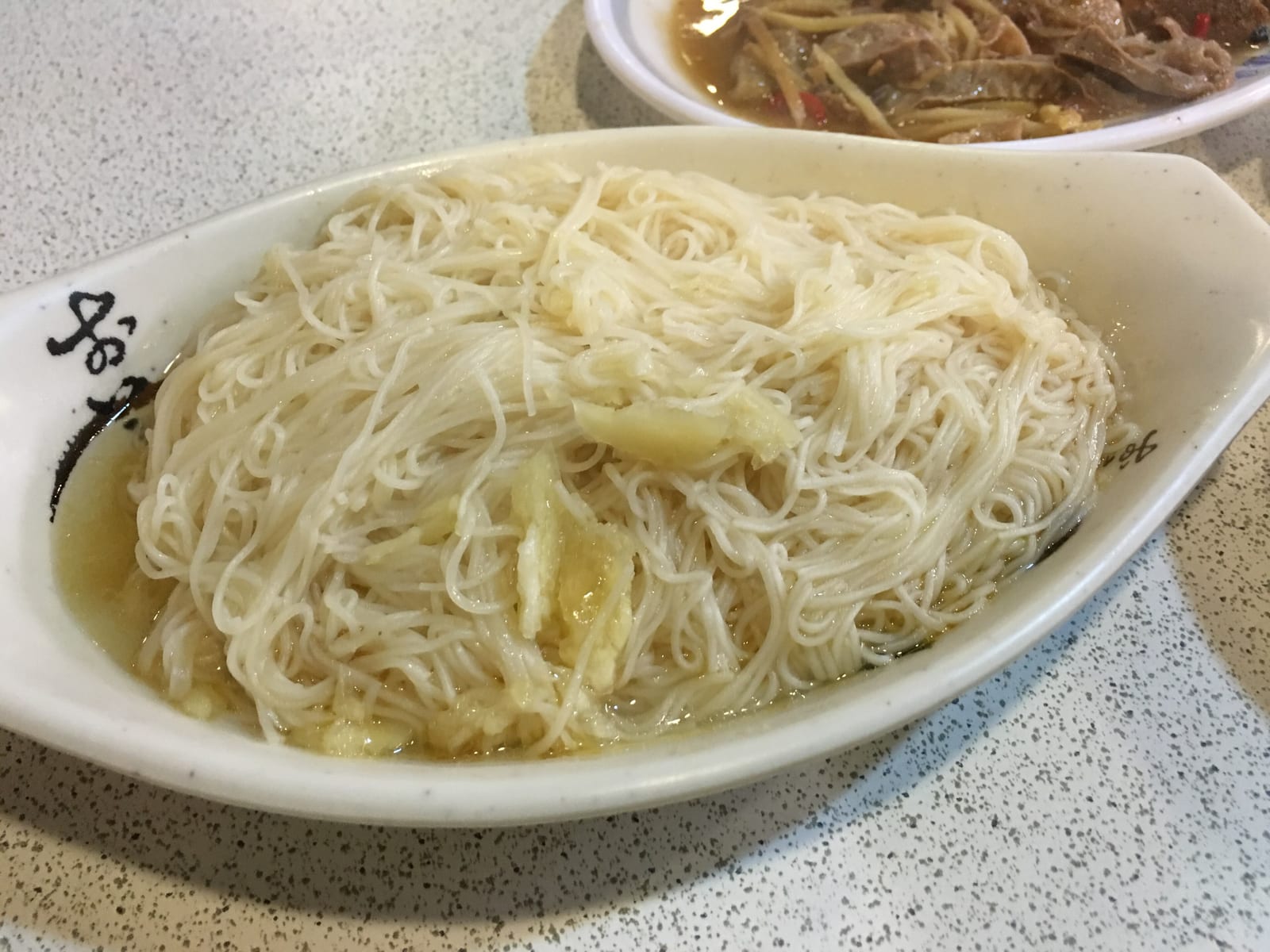
Kinmen Oyster Noodle Porridge is a traditional Kinmen breakfast dish made by simmering handmade thin noodles until they dissolve naturally into a thick broth, with no starch thickener added. The Kinmen Daily newspaper describes its texture as "soft but not mushy, clear but not murky." Traditional toppings include Kinmen's signature rock oysters, pig intestine, and pig blood, served with crispy you tiao. In leaner years, a bowl of this porridge was also an affordable after-school snack for Kinmen children.
According to a Kinmen Daily News feature article on noodle porridge, it ranks alongside Cantonese-style congee as one of Kinmen locals' favorite breakfasts; the traditional method uses no starch thickener, relying instead on long-simmered handmade thin noodles to achieve its thick texture. In earlier, economically leaner decades, a bowl of noodle porridge served as an affordable afternoon snack for Kinmen schoolchildren, priced at roughly NT$0.5 to NT$1 at the time.
What is Kinmen Oyster Noodle Porridge
Kinmen oyster noodle porridge uses locally handmade fine white noodles as its base, simmered in broth until the noodles dissolve naturally into a thick, cohesive body — no tapioca starch is added for thickening. This is the fundamental difference between Kinmen's version and the starch-thickened oyster noodle found in other parts of Fujian. Toppings center on rock oysters, pig intestine, meat rolls, and egg drops; the broth is clean and briny, finished with white pepper and cilantro. You tiao sections for dipping are optional but standard.
Why does it represent Kinmen? The quality of Kinmen handmade thin noodles is high (long-established shops such as Ma Family Noodles have hand-pulled and sun-dried them for generations), and even after the noodles dissolve, their fibers remain distinct — the result is thick but not mushy. The breakfast cluster around Mofan Street and the Qiu Lianggong ancestral residence in Jincheng includes Qiaowei Xiang, Wenji, and other veteran stalls operating alongside Cantonese congee shops — Kinmen people's morning often means choosing between the two. The no-starch approach is a true technical threshold: the broth's thickness depends entirely on the noodles themselves and precise heat control.
How to eat it the local way
Local knowledge
Verified facts (sponsored content filtered)
- The Kinmen Daily features it as a representative Kinmen breakfast, naming it a breakfast sibling alongside Kinmen Cantonese Congee.
- Kinmen oyster noodle porridge uses a no-starch method — the technical benchmark is achieving thick consistency through natural dissolution of handmade thin noodles alone.
- The breakfast cluster around Mofan Street and the Qiu Lianggong ancestral residence in Jincheng includes veteran stalls such as Qiaowei Xiang and Wenji.
Visitor tips
- Most shops open around 6 a.m. and close by noon; sold out by afternoon is common.
- Parking in Jincheng is difficult; consider using the public lot near the Qiu Lianggong ancestral residence and walking to the breakfast street.
- Rock oysters are at their best from late winter to early spring; in summer some shops may substitute other seafood.
Data compiled from the Kinmen County Tourism Bureau, Kinmen Winery, and a large volume of public reviews, with sponsored content filtered out.
Frequently Asked Questions
Why doesn't Kinmen oyster noodle porridge use a starch thickener?
Its thick texture comes entirely from handmade thin noodles dissolving naturally after long simmering, not from added starch — the key difference from the starch-thickened noodle soups common on Taiwan's main island.
What are the traditional toppings?
Traditional toppings center on Kinmen's own rock oysters, pig intestine, and pig blood, finished with white pepper and cilantro, often served with sliced you tiao for dipping.
When is the best time to eat it?
It is mainly served for breakfast, from early morning until around noon, as many shops sell out by early afternoon.
Sources
- 金門日報-兒時的好滋味──金門麵線糊 — 金門日報官方報導,麵線糊與廣東粥並列在地早餐、早年物價等事實