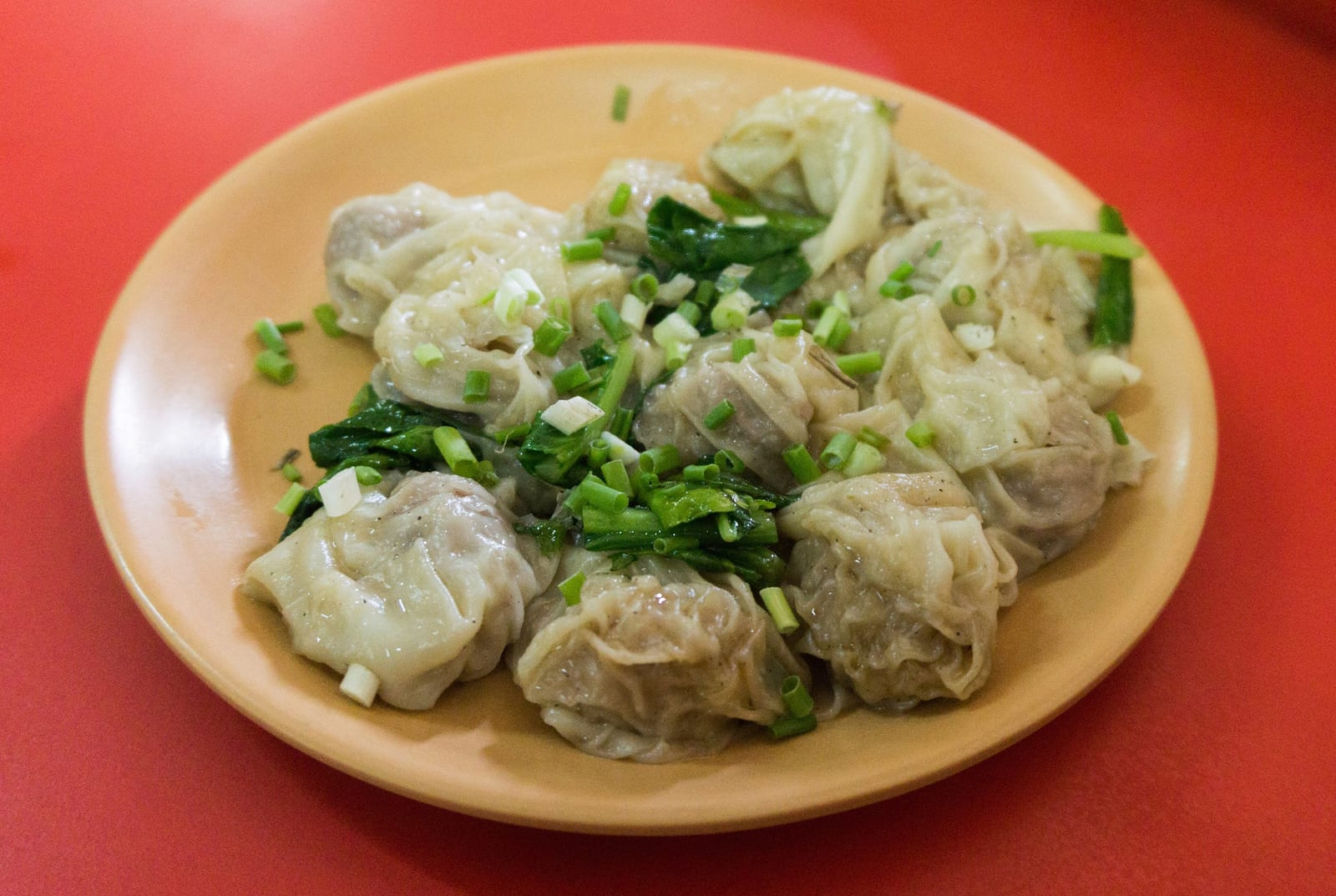
Hualien wonton is a signature breakfast and street food of Hualien City, made by wrapping lean pork filling in an extremely thin dough skin, shaping it into a gold-ingot form, and serving it in a clear pork-bone broth topped with crispy shallots and celery bits. Walking from Hualien Train Station into the city, the shop signs along Xinyi Street almost always feature the two characters 'bianshi'; the broth is clear to the bottom, and the wonton skin is so thin it nearly reveals the filling inside — a breakfast scene locals have savored for more than sixty years.
Yexiang Bianshi on Xinyi Street in Hualien was founded by Dai A-huo, a Hakka native of Guanxi in Hsinchu, who learned to make bianshi from a chef trained in Fuzhou and started as a shoulder-pole street vendor; the shop, now run by the third generation, has been operating for more than 70 years. In 1976, then-Premier Chiang Ching-kuo dined there, propelling the shop to wider fame. Another well-known shop, Daiji Bianshi, was founded in 1959 and announced its closure on August 31, 2023.
What is Hualien Wonton
"Bianshi" is the Hokkien word for wonton. The Hualien version is known for its extremely thin skin and lean filling — fresh pork hind leg meat hand-chopped and shaped into a gold-ingot form with a little tail. The broth is light: pork bones simmered and finished with house-made crispy shallots and celery bits, relying on natural flavor rather than MSG. A bowl holds around 10 wontons, priced at just coins — an everyday food that Hualien locals eat from morning to night.
Why did Hualien become the home of bianshi? Yexiang Bianshi on Xinyi Street was founded in 1922, a century-old institution still family-run today, once recorded in the National Cultural Memory Bank; it rose to wider fame after then-premier Chiang Ching-kuo visited in the 1960s. Daiji Bianshi has been passed down three generations, and together with Yexiang and Haipuu Egg Pancake, forms what locals call the "Three Swords of Hualien City Breakfast." With several century-old shops coexisting and each with its own loyal following, Hualien bianshi has become a culinary cluster rather than a single-shop legend. Locally the dish is also known by its Hokkien name, Pián-si̍t, a reminder that the snack traveled to Hualien with Hoklo settlers long before it became a citywide fixture.
How to eat it the authentic way
Local know-how
Verified endorsements (ad-free)
- Yexiang Bianshi was founded in 1922 — a century-old shop recorded in the National Cultural Memory Bank, which surged in popularity after Chiang Ching-kuo's visit in the 1960s.
- Daiji Bianshi has been passed down three generations, with Google reviews consistently exceeding 1,000 entries, standing alongside Yexiang as one of the two great names on Xinyi Street.
- Hualien Tourism Information Network lists bianshi as a must-try snack in Hualien City — a cluster of shops rather than any single designated spot.
Practical tips
- Yexiang can have queues starting at 30 minutes on weekend afternoons; weekday mornings before 10 a.m. or 2–4 p.m. are smoother.
- Most old shops on Xinyi Street are cash-only; mobile payments may not be accepted, so bring change.
- Wontons are generally not available for takeaway with the broth. If you want to take them away, ask for broth and noodles separated, and eat within 30 minutes for the best texture.
Data compiled from Hualien County Government Tourism Department, local township farmers' associations, and large-scale public reviews; sponsored content has been filtered out.
Frequently Asked Questions
What kind of snack is Hualien wonton?
It is a signature Hualien breakfast dish of extremely thin dumpling skins wrapped around lean pork filling, shaped into a gold-ingot form, and served in a clear pork-bone broth with crispy shallots.
What year was Yexiang Bianshi founded?
No official founding year has been confirmed, but the shop is known to have operated for more than 70 years, now run by the third generation after founder Dai A-huo.
What is the connection between Chiang Ching-kuo and Hualien wonton?
In 1976, then-Premier Chiang Ching-kuo dined at Yexiang Bianshi, and the shop became widely known afterward.
Can I still eat at Daiji Bianshi?
No — Daiji Bianshi, founded in 1959, announced its closure on August 31, 2023.
Sources
- 液香扁食 - 國家文化記憶庫 — 液香扁食創辦人戴阿火與1976年蔣經國到訪記載
- 傳承三代花蓮戴記扁食8月底歇業 — 戴記扁食2023年8月31日結束營業報導