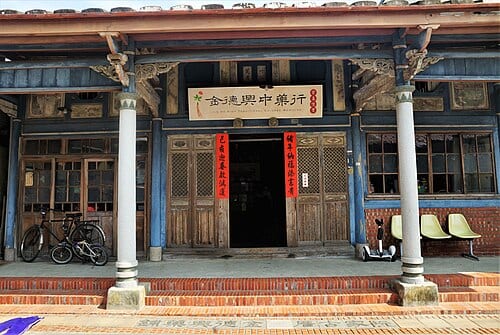
Houbi Jingliao Old Street is a well-preserved rural shophouse settlement in Houbi, Tainan, dating from the Japanese colonial era through the early postwar period and known as 'Taiwan's Last Village.' The 2005 documentary Wu Mi Le (Let It Be) was filmed here, documenting the lives of elderly farmers such as Kunbin-be and drawing widespread attention to this remote rural settlement as an important landmark of Taiwanese cultural heritage.
The documentary Wu Mi Le (Let It Be), directed by Yan Lanquan and Zhuang Yizeng, was released in Taiwan in 2005 and follows the lives of elderly Jingliao rice farmers including Huang Kunbin, known as Kunbin-be. Kunbin-be passed away in February 2021 at age 92; of the film's original farmer subjects, only Wenlin-be remains living.
Highlights of Houbi Jingliao Old Street
Jingliao Old Street is located in Jingliao Li, Houbi District, Tainan City. It is one of the rare rural settlements in Taiwan that still retains a complete row of shophouse buildings from the Japanese colonial era through the early postwar period. The buildings on both sides of the street are mostly brick-built, in a Southern Fujian and Japanese eclectic commercial shophouse style, with old signboards, wooden sliding doors, and brick walls preserved on the facades. The overall streetscape is relatively intact, without large-scale demolition or redevelopment, presenting the historical appearance of a rural commercial settlement.
The 2008 documentary Wu Mi Le (directors Yan Lanquan and Zhuang Yizeng) was filmed in and around Jingliao, documenting elderly rice farmers such as Kunbin-be and their steadfast commitment to farming despite a difficult agricultural environment. The film resonated widely and brought greater attention to the Jingliao rural settlement. Some traditional old shops in the old street continue to operate today. The surrounding rice paddies change with the seasons — lush green in spring and summer, golden with ripening rice in autumn — reflecting the natural rhythm of Taiwan's agricultural landscape.
How to Make the Most of Your Visit
Practical Information
Getting There & Time
- From central Tainan, the drive takes about 50–60 minutes. Alternatively, take the Taiwan Railways to Houbi Station; from there, Jingliao Old Street is about 3–4 kilometers away by bicycle or on foot (walking takes about 45 minutes).
- The old street is open for self-guided visits at all times, and old shops are mostly open during the day. Weekends attract more visitors — a weekday visit better captures the everyday atmosphere of the rural settlement. The rice paddy scenery is most spectacular during the autumn harvest (October–November).
Nearby Connections
- The rice paddies surrounding Houbi District are wide and open. Cycling along farm roads is a great way to explore and take in the expansive views of Taiwan's agricultural landscape. Bicycle rental is available near Houbi Train Station.
- The lotus flowers in Baihe (northern Tainan, open in summer around June–August) are about 20–25 minutes from Houbi by car, making it possible to combine this into a seasonal northern Tainan rural and lotus flower itinerary.
Source: and the Wikipedia article on Jingliao.
Frequently Asked Questions
When was the documentary Wu Mi Le released?
In 2005 in Taiwan, directed by Yan Lanquan and Zhuang Yizeng.
Is Kunbin-be, the film's central farmer, still alive?
No, he passed away in February 2021 at age 92; among the film's three elderly farmer subjects, only Wenlin-be is still living.
Why is Jingliao called 'Taiwan's Last Village'?
Because it retains a complete row of shophouses from the Japanese colonial era through the postwar period, largely without major redevelopment.
Sources
- 無米樂 - 維基百科 — 導演、2005年上映年份、主角資料
- 崑濱伯驟逝《無米樂》3主角只剩1人文林伯嘆人生無常 - 公視新聞 — 崑濱伯辭世時間與年齡、僅文林伯仍在世