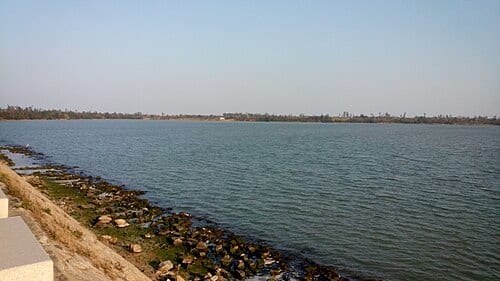
Cihu is a man-made saltwater lake on the northwest coast of Kinmen Island, built by damming a former tidal inlet in 1969 on the initiative of Kinmen Defense Command commander Ma Anlan and completed the following year; nearly 200 bird species have since been recorded there. The lake has birdwatching pavilions and trails and is Kinmen's most important site for viewing flocks of great cormorants.
Cihu was originally a lagoon that exchanged water with the tide before being dammed shut in 1969 on the initiative of Kinmen Defense Command commander Ma Anlan and converted into a man-made lake, completed in 1970. Its official wetland boundary, confirmed in 2015, covers about 118 hectares. Nearly 200 bird species have been recorded, most of them sandpipers, and it is Kinmen's most important site for viewing great cormorants; juvenile horseshoe crabs and Eurasian otters are recorded on Kinmen only at Cihu.
Highlights of Cihu Wetland
Cihu is located on the north side of Guningtou in Jinning Township. The lake area consists of sandbars and lagoon terrain connected to the north coast. Protected by Kinmen's overall low level of development, the vegetation and waterbird habitats remain relatively stable. Aquatic plants and reed beds within the lake area provide migratory birds with conditions for roosting and foraging.
The peak birdwatching season runs from October to March of the following year. Great cormorants, pied avocets, and black-faced spoonbills have all been recorded here, with cormorant gatherings particularly impressive in number. The lake area has interpretation panels introducing identification methods for the main bird species, and the birdwatching pavilions provide a sheltered vantage point that minimizes disturbance to the birds.
Tips for Getting the Most Out of Your Visit
Practical Information
Getting There & Hours
- Cihu is in Jinning Township, not far from the Guningtou Battle Museum. Driving or cycling is the easiest way to reach it. The lake trails are an open outdoor space with no admission fee.
- The best birdwatching windows are roughly one hour after sunrise and one hour before sunset. Allow at least 1 hour at the birdwatching pavilion to observe.
Nearby Connections
- The Guningtou Battle Museum and Beishan Western Mansion are nearby and can be combined into a half-day route mixing natural ecology with wartime history.
- Lincuo Village is not far in the Cihu direction; those interested in traditional settlement architecture can extend the trip there.
Sources: Kinmen National Park Headquarters; Wikipedia entry on Cihu (Kinmen County).
Frequently Asked Questions
Is Cihu a natural lake?
No, Cihu was originally a lagoon; the military dammed its tidal inlet in 1969 to convert it into a man-made saltwater lake, completed the following year.
When is the best season for birdwatching at Cihu?
October through March is the peak period for migratory birds; nearly 200 species have been recorded, and it is Kinmen's most important site for viewing great cormorants.
Are there any species unique to Cihu on Kinmen?
Juvenile horseshoe crabs and Eurasian otters are currently recorded on Kinmen only at Cihu, and both are under pressure from declining numbers.
Sources
- 慈湖(金門縣)- 維基百科 — 人工湖形成史、鳥種記錄、特有物種