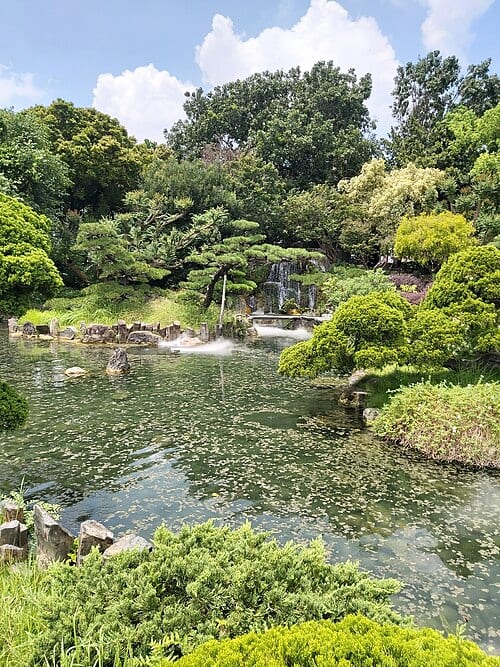
Chengmei Cultural Garden is a private cultural estate in Yongjing Township, Changhua County, centered on Chengmei Gongtang (the Wei family ancestral hall), construction of which began in 1885. The area currently open to visitors covers about 10 hectares (a 3.5-hectare west garden and a 6.5-hectare east garden), blending traditional Minnan courtyard architecture with Japanese garden design. The east and west gardens feature bald cypress trails and a Japanese dry-landscape garden, reflecting the historical background of Hakka and Minnan cultural blending in Yongjing Township. The period when the bald cypress changes color (December through January of the following year) draws the largest crowds.
The core building of Chengmei Cultural Garden, Chengmei Gongtang, was originally built in 1885 (the 11th year of the Guangxu reign) as a simple bamboo-tube house, and was rebuilt in 1917 into a two-courtyard layout with double side wings. Restoration work began in 2005 and took about seven years to complete before the site opened to visitors; the area currently open to the public covers about 10 hectares (a 3.5-hectare west garden and a 6.5-hectare east garden).
Highlights of Chengmei Cultural Garden
Chengmei Gongtang was built in 1885 (the 11th year of the Guangxu reign of the Qing dynasty) and served as the public hall (ancestral hall) of the Wei family. The Minnan three-sided courtyard layout is intact, with swallowtail ridges and brick walls in good condition. Inside the hall, the Wei family genealogy and clan historical artifacts are displayed, providing a record of the early immigrant pioneering history of Yongjing Township. It is worth noting that Yongjing Township is one of the Hakka communities in Changhua County; while preserving the family's history, Chengmei Cultural Garden also embodies the co-existence of multiple ethnic cultures in this area.
The garden design on both the east and west sides incorporates Japanese elements: a dry-landscape garden, stone lanterns, and neatly trimmed pine and cypress trees create a stylistic contrast to the Minnan main building. The bald cypress trail turns orange-red from December through January, reflecting on the water surface to create a popular photographic scene. The park has the Songbai Pavilion (Songbo Xuan) scenic restaurant where you can dine amid garden views, but seating is limited — on weekends it is advisable to check reservation information in advance.
Tips for Getting the Most Out of Your Visit
Practical Information
Getting There & Visiting Hours
- Driving is most convenient. Take the Yuanlin interchange off National Freeway 1 and follow the provincial road to Yongjing; Chengmei Cultural Garden has a car park. Check official announcements for exact entry fees.
- The bald cypress color-change season (December through January) draws the largest crowds on weekends. Weekday mornings are recommended — more space for parking and photography.
Nearby Connections
- Yongjing Township is known for its flower and nursery industry; several nurseries are near the park, and it can be combined with Tianwei Flower Garden for an agricultural landscape themed route.
- Yuanlin City is about 15 minutes from Chengmei Cultural Garden by car — a convenient place to catch a train or find a meal.
Sources: Official information from Chengmei Cultural Garden; Changhua County Tourism Bureau.
Frequently Asked Questions
When was Chengmei Gongtang built?
It was originally built in 1885 as a simple bamboo-tube house and rebuilt in 1917 into a two-courtyard layout with double side wings.
How large is the area open to visitors at Chengmei Cultural Garden?
The publicly accessible area covers about 10 hectares, divided into a 3.5-hectare west garden and a 6.5-hectare east garden.
Sources
- 成美文化園 - 維基百科 — 成美公堂1885年始建、園區面積沿革
- 彰化第一!成美文化園「魏成美公堂」獲文化部古蹟維護獎肯定-天下雜誌 — 成美公堂歷史沿革、修復年份