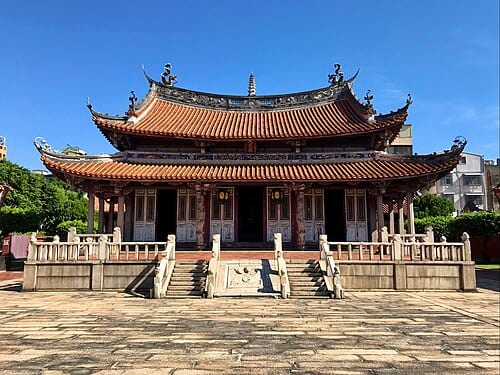
Changhua Confucius Temple is a Confucian learning temple on Kongmen Road in Changhua City, built in 1726 (the 4th year of the Yongzheng reign) at the initiative of magistrate Zhang Hao. It is the earliest Confucian temple established in central Taiwan and was designated a National Historic Site (originally a First-Grade Historic Site) in 1983. Built to Qing dynasty official specifications, it features the Dacheng Hall, east and west wing halls, and the Lingxing Gate in an intact architectural layout, making it an important physical record for studying the Qing dynasty's officially administered Confucian education system in Taiwan; each autumn the Shidian ceremony is held here following ancient rites.
Changhua Confucius Temple was founded in 1726 (the 4th year of the Yongzheng reign) on the initiative of magistrate Zhang Hao. On December 28, 1983, it was designated a First-Grade Historic Site by the Ministry of the Interior, a status now categorized as a National Historic Site; it is considered one of the most architecturally complete Qing dynasty official Confucian temples in Taiwan, and along with the Tainan Confucius Temple, one of only two Qing-era Confucius temples in Taiwan still standing on their original sites.
Highlights of Changhua Confucius Temple
The temple buildings are arranged in symmetrical alignment along a central axis. Running from south to north in order are the Lingxing Gate, the Dacheng Gate, the Dacheng Hall, and the Chongsheng Shrine, conforming to Qing dynasty official regulations. The Dacheng Hall has a double-eave hip roof; the main hall enshrines the spirit tablet of Confucius, the Most Sacred Ancient Teacher, while the east and west wings honor Confucian sages and scholars from successive eras. The temple forecourt is planted with old trees, and the overall environment is solemn and serene — a quiet atmosphere reminiscent of a traditional academy, quite different from the lively bustle of ordinary temples.
Each year, around the 27th day of the eighth lunar month — Confucius's birthday (near Teachers' Day) — the autumn Shidian ceremony is held, presided over by local officials. The ceremony follows the ancient six-row Yiyue (ritual dance), accompanied by musicians performing Zhou dynasty court music. It is one of the most comprehensive traditional Confucian ceremonies surviving in Taiwan. The ceremony is not ticketed; the public may observe from the periphery. It is a rare opportunity to witness Qing dynasty official ritual protocol in Taiwan.
Tips for Getting the Most Out of Your Visit
Practical Information
Getting There & Visiting Hours
- About 15 minutes on foot from Changhua Train Station, or take a city bus to the Confucius Temple stop. Check Changhua County bus real-time information to confirm schedules.
- Open for visits on ordinary days; opening hours may be adjusted during ceremonial periods. Check official Changhua Confucius Temple information before setting out.
Nearby Connections
- Baguashan Great Buddha Scenic Area is about 20 minutes away on foot; the Changhua Roundhouse is also within walking distance. The three sites can be combined into a Changhua City cultural route.
- The Changhua County Art Museum is near the Confucius Temple and can add a contemporary art component to the itinerary.
Sources: Cultural Heritage Bureau, Ministry of Culture; Cultural Affairs Bureau, Changhua County Government.
Frequently Asked Questions
When was Changhua Confucius Temple established?
It was founded in 1726, the 4th year of the Yongzheng reign, on the initiative of magistrate Zhang Hao, making it the earliest Confucian temple established in central Taiwan.
What heritage designation does Changhua Confucius Temple hold?
It was designated a First-Grade Historic Site on December 28, 1983, a status now classified as a National Historic Site, not a county-level one.
Sources
- 彰化孔子廟-國家文化資產網 — 1983年12月28日公告為第一級古蹟(今屬國定古蹟)
- 彰化孔子廟 - 維基百科 — 1726年雍正4年創建沿革