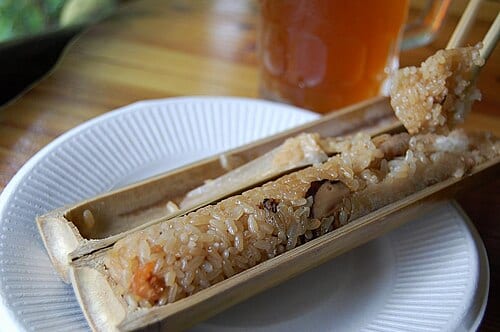
Bamboo tube rice is a traditional Indigenous Taiwanese dish made by slow-roasting millet or glutinous rice inside a fresh bamboo tube over charcoal. In Pingtung, the Rukai community of Wutai and the Paiwan community of Sandimen still keep this festival-food tradition alive, and the bamboo fragrance that seeps into the rice cannot be replicated by any other method.
Wutai Township is Pingtung County's highest-elevation township at roughly 1,000 meters and home to a well-preserved slate-house Rukai community; Sandimen Township is a Paiwan community. Bamboo tube rice is traditionally made with moso or makino bamboo and is documented as a festival food of the Rukai and Paiwan peoples (exact origin date unconfirmed).
What is Indigenous Bamboo Tube Rice
Bamboo tube rice uses fresh green bamboo (typically moso bamboo or makino bamboo) cut into a single node, with the natural bamboo seal kept at the bottom as the base. Soaked millet or glutinous rice (sometimes mixed) is filled in, along with a small amount of water or coconut milk (depending on tribal custom), and the opening is sealed with a banana leaf or shell ginger leaf. The tube stands upright beside a charcoal fire and slow-roasts for forty minutes to one hour. The bamboo wall conducts heat evenly; the bamboo sap melds with the rice. The finished rice is springy and carries a natural bamboo and wood fragrance. To eat, split the bamboo node open and take the rice out directly, or carry the whole section with you.
Wutai Township is the main Rukai community in Pingtung, with well-preserved slate-house culture; Sandimen Township is a Paiwan community where the indigenous market supplies bamboo tube rice year-round. Both peoples have traditions of bamboo tube rice as a ceremonial food, with records in the Pingtung County Wutai Township Office's tribal industry promotion and the Ministry of Culture's indigenous food culture documentation. Bamboo tube rice at the Sandimen indigenous market is available year-round; the Wutai tribal kitchen has limited operating hours — confirm in advance.
How to eat it like a local
Local Knowledge
Objective Endorsements
- The Pingtung County Wutai Township Office tribal industry promotion records bamboo tube rice as a traditional Rukai ceremonial food; the Ministry of Culture's indigenous food culture records include bamboo tube rice culture for both Paiwan and Rukai peoples.
- The Sandimen indigenous market and Wutai tribal kitchen are both legally operating tribal industry venues under the guidance of the County Government's Indigenous Peoples Affairs Office — not commercial tourist restaurants.
Tips for Visiting
- Provincial Highway 24 heading up to Wutai has access controls during certain hours. Check the traffic management authority's schedule before driving up to avoid getting stranded on the mountain.
- Bamboo tube rice supply at the Sandimen indigenous market is limited. Arriving before 10 a.m. on holidays gives you the best chance of getting some; supply drops off noticeably in the afternoon.
Sources: Pingtung County Wutai Township Office tribal industry promotion; Ministry of Culture indigenous food culture records.
Frequently Asked Questions
What is bamboo tube rice?
Bamboo tube rice is millet or glutinous rice packed into fresh bamboo and slow-roasted beside a charcoal fire — a traditional Indigenous dish.
Where can I try an authentic version?
Tribal kitchens in Wutai and the Sandimen indigenous market, Pingtung, are the main places to try freshly roasted bamboo tube rice.
How should I eat it?
Split the bamboo node open and eat with your hands or a bamboo strip, typically paired with cured meat.
Sources
- 霧台石板聚落-TravelKing旅遊王 — 霧台鄉海拔約1,000公尺、石板屋聚落
- 竹筒飯-維基百科 — 竹筒飯製作方式與原住民族節慶食用傳統