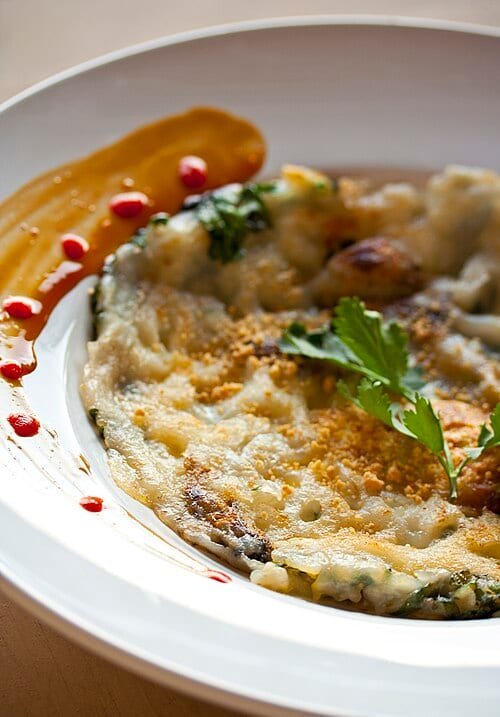
Lukang Oyster Omelette is a signature Lukang seafood snack made with plump oysters from the nearby Wanggong and Fangyuan fishing harbors, coated in batter and pan-fried. On the plaza in front of Tianhou Temple, a griddle sizzles as the vendor works quickly — batter, oysters, egg, and greens go in, a flip and press, then a swirl of pink sauce, and a hot plate arrives at the table. Bite into an oyster and juice bursts out; crisp at the edges, soft in the center, the sea flavor surges through. This is the signature seafood dish of a century-old temple plaza.
Lukang has been a major trading port since the Qing dynasty, ranked alongside Tainan and Wanhua (Bangka) in the old saying "first Tainan, second Lukang, third Wanhua," and was officially designated a cross-strait trading port in 1784. The coastal towns of Wanggong and Fangyuan just west of Lukang remain important oyster-farming areas. Multiple oyster omelette specialty shops still operate around Lukang's Tianhou Temple old street, including Miaokou Diyijia, San Jiemei Oyster Omelette, and Haizhen Oyster Omelette, as listed on the Changhua County official tourism website.
What is Lukang Oyster Omelette
Oyster omelette is made by pouring sweet potato starch batter onto a hot griddle, adding fresh oysters, egg, and greens (often garland chrysanthemum or baby bok choy), and cooking it into a patty. Once off the heat, it is finished with sweet-spicy pink sauce. The Lukang version is distinguished by its oysters, which come from the nearby fishing harbors of Wanggong and Fangyuan — plump and full-flavored. The batter is mixed thinner than average, resulting in crisp, fragrant edges and a soft, springy center. A serving typically includes two to three oysters and is a go-to for both temple-plaza late-night snacking and afternoon meals.
Lukang has been a major Taiwanese port since the Qing dynasty, and the oyster-farming communities along the coast to the west — Wanggong and Fanguan — made it a natural hub for oyster omelette. Lukang's Tianhou Temple, a Mazu temple more than three hundred years old, draws a cluster of long-established oyster omelette shops and food stalls around its plaza, forming a temple-food district. This guide is organized by dish; the various oyster omelette shops around the plaza are presented together — no single-store ranking is made.
How to eat it the local way
Local knowledge
Objective endorsements (ad-free)
- Lukang's coastal location and the oyster-farming towns of Wanggong and Fanguan to the west have established oyster omelette as one of the area's representative seafood dishes.
- Tianhou Temple is a Mazu temple over three hundred years old; the cluster of long-standing oyster omelette shops around its plaza forms a recognized food district.
- This guide is organized by dish; A-dao and other shops around the temple plaza are presented as peers within the same category — no single-store ranking is made.
Practical tips
- Plaza stalls are busiest on Saturdays, Sundays, and public holidays; some long-standing shops operate only from noon to early evening on weekdays — check opening hours before you go.
- Park near Lukang Township Office and walk into the old street; parking near the temple plaza on weekends is extremely difficult.
- You can combine oyster omelette with a walk through Lukang Old Street, Jiuqu Lane, Longshan Temple, and Moliu Lane for a full-day visit; pair it with mianxian hu, ox-tongue pastry, and other local bites.
Data compiled from the Changhua County Government Tourism website, Lukang Township Office, and a large volume of public reviews; promotional listings have been filtered out.
Frequently Asked Questions
Where do the oysters in Lukang Oyster Omelette come from?
Most come from the fishing harbors of Wanggong and Fangyuan just west of Lukang, an important oyster-farming area in Changhua.
Where is the best place to eat oyster omelette in Lukang?
The old street around Lukang's Tianhou Temple has clusters of long-standing oyster omelette shops, recognized locally as the go-to food district.
Why did oyster omelette become a Lukang specialty?
Lukang has been a major Taiwanese port since the Qing dynasty, and its proximity to oyster-rich coastal towns made oyster omelette a natural local specialty.
Sources
- 廟口第一家 - 彰化旅遊資訊網 — 鹿港天后宮周邊蚵仔煎老店官方收錄
- 一府二鹿三艋舺 - 維基百科 — 鹿港清代港口地位、1784年正口年份