Jinguashi Gold Museum is a public museum built on the site of the former Jinguashi gold mine in Ruifang District, New Taipei City. The park preserves a complete set of mining-settlement buildings, the Crown Prince Chalet, ore-processing plant ruins, and a tunnel system, making it one of the few places in Taiwan where large-scale industrial mining heritage can still be visited. It offers gold-panning experiences and entry into Tunnel No. 5 (Benshan), serving as an important on-site location for understanding Taiwan's mining history.
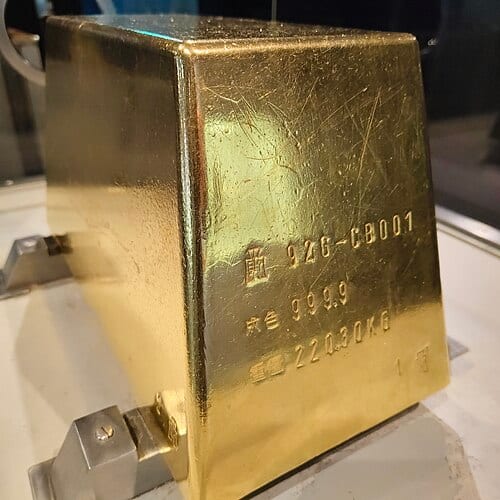
The Gold Museum officially opened on November 4, 2004, and is Taiwan's first museum built around the ecomuseum concept. It displays a 220.3-kilogram gold bar owned by the Central Bank of the Republic of China (Taiwan), cast in 2003 by the Industrial Technology Research Institute. The bar was certified by Guinness World Records in 2004 as the world's heaviest gold bar at the time, a record it held for about a year before being surpassed in 2005 by a 250-kilogram bar in Shizuoka, Japan.
Highlights of Jinguashi Gold Museum
The core complex of buildings is spread across a hillside, with Japanese-style wooden staff dormitories, a red-brick ore-processing plant, and tunnel entrances as the main points of interest. The Crown Prince Chalet was built in 1922 as a temporary imperial residence for the Japanese Crown Prince (later Emperor Shōwa). The wooden structure is well preserved and has an interior exhibition of period furnishings; opening for interior visits follows a scheduled timetable — check official announcements.
Tunnel No. 5 is open for walking tours; the interior maintains a constantly cool and humid temperature, giving visitors a real sense of the working conditions miners faced. The gold-panning experience area provides gold-bearing ore and panning dishes — visitors can try the traditional panning process hands-on, suitable for all ages. The terrain is hilly; comfortable walking shoes are recommended as the paths have many slopes. Wheelchair users should check the accessible route in advance.
How to make the most of your visit
Practical information
Getting there & timing
- From Taiwan Railways Ruifang Station, take a Keelung Bus toward Jinguashi; check Keelung Bus official timetables for schedules, with extra buses on weekends.
- Opening hours and admission fees: check the New Taipei City Government Gold Museum official website. The museum may be closed on Mondays — confirm in advance for holidays.
Nearby connections
- Jinguashi and Jiufen are adjacent — about a 20–30 minute walk. After visiting the Gold Museum, walking downhill to Jiufen Old Street is an easy continuation.
- Ruifang District also has the 'Yin-Yang Sea' viewpoint (where iron-rich mine runoff turns the seawater rust-colored); it can be seen from the Jinguashi trail, and the color contrast is striking on clear days.
Sources: New Taipei City Government Gold Museum official website, Wikipedia entry for Gold Museum.
Frequently Asked Questions
How heavy is the large gold bar displayed at the Gold Museum?
The museum displays a 220.3-kilogram gold bar, certified by Guinness World Records in 2004 as the world's heaviest gold bar at the time.
When did the Gold Museum open?
The Gold Museum opened in November 2004 and is Taiwan's first museum built around the ecomuseum concept.
Can visitors enter the mining tunnel?
Yes, Tunnel No. 5 (Benshan) is open for walking tours, and its interior stays cool and humid year-round, giving visitors a sense of the miners' working conditions.
Sources
- 金瓜石大金磚 - 維基百科 — 金磚重量、鑄造與金氏世界紀錄認證年份
- 黃金博物館鎮館之寶 220公斤黃金磚曾破世界紀錄 - 報時光(udn) — 開館日期與金磚展示細節