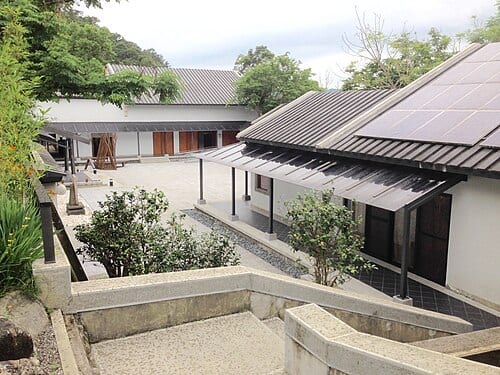
Pinglin Tea Museum and Tea Plantations is a tea-culture museum and surrounding tea-growing landscape in Pinglin District, New Taipei City. The museum opened in 1997, covers close to 3 hectares, and is built around a Fujian Anxi-style courtyard complex that displays the full tea-processing workflow — picking, withering, kill-green, and drying — along with the history of Pinglin's tea industry. Pinglin is the main production area for Wenshan Baozhong tea, with tea gardens stretching along both banks of the Beishi River and more than 80% of residents engaged in tea-related work.
Pinglin Tea Museum opened in January 1997 (the 86th year of the Republic era), occupies close to 3 hectares, and is built in a Fujian Anxi-style courtyard design. More than 80% of Pinglin District residents work in tea-related industries, with tea plantations covering close to 1,000 hectares, mainly Wenshan Baozhong tea.
Highlights of Pinglin Tea Museum and Tea Plantations
The exhibition halls introduce the unique light-fermentation process of Baozhong tea; display samples show the characteristic twisted strip-shaped leaves, and the difference in aroma profile from the oolong tea family is explained. The museum has a tea tasting area where samples of Baozhong tea from Pinglin farmers can be tasted (availability and fees depend on that day's arrangement). The Fujian-style courtyard is spacious, with swallowtail roof ridges and red-brick walls as the main architectural features.
Outside the museum, large terraced tea gardens can be seen along the hillsides on both sides of Beiyi Road. During harvesting seasons — spring tea around March–May and winter tea around October–November — farmers can be seen hand-picking. Tea shops on Pinglin Old Street sell tea directly; some offer tasting. The Beishi River Ecological Protection Area is also within Pinglin, with clear streams suitable for pairing with natural observation.
How to make the most of your visit
Practical information
Getting there & timing
- From Taipei, take the MRT to Xindian Station then transfer to a Pinglin-bound bus (849 Pinglin or a designated route); check the New Taipei City bus real-time system for detailed schedules.
- By car, take Beiyi Road (Provincial Highway 9) or the Beiyi Expressway to the Pinglin interchange. Museum opening hours and admission fees: check the official website; closed on Mondays.
Nearby connections
- Continuing on Beiyi Road leads to Yilan — a cross-mountain route is possible. Heading back toward Taipei, Shiding Old Street is about a 20-minute drive away.
- The Beishi River Ecological Protection Area has walking trails; combining them with the Tea Museum makes a nature-and-culture half-day Pinglin light trip.
Sources: Pinglin Tea Museum official website, Wikipedia entry for Pinglin Tea Museum.
Frequently Asked Questions
When did Pinglin Tea Museum open?
It opened in January 1997 and is located beside the Beishi River in Pinglin District, New Taipei City.
How large is Pinglin Tea Museum?
The museum covers close to 3 hectares and is built around a Fujian Anxi-style courtyard complex.
What kind of tea does Pinglin grow?
Pinglin is the main production area for Wenshan Baozhong tea, with more than 80% of residents working in tea-related industries.
Sources
- 博物館簡介 - 新北市坪林茶業博物館 — 官方簡介,載明1997年開館、佔地近3公頃、閩南安溪風格建築