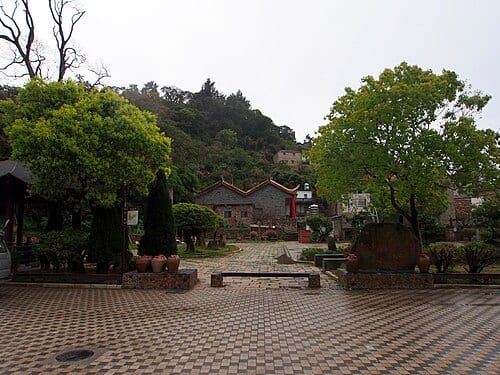
Jinsha Village is a Min-Dong stone-house fishing settlement on Nangan's southwestern tip, the westernmost point of the Matsu Islands, named "Jinsha" (golden sand) for its fine, gold-colored beach and later written with a more refined character. From the late Qing dynasty onward, settlers from Lianjiang, Changle, and Langqi Island progressively moved in, and the village grew into Nangan's second-largest settlement, with residents also running wine breweries, pharmacies, and shops alongside fishing; as the fishing industry declined and residents left, some stone houses have since been renovated into guesthouses.
Jinsha Village was originally called "Zengsha"; its beach's fine, golden sand gave rise to the popular name "Jinsha" (golden sand), later refined in writing. From the late Qing dynasty, settlers from Lianjiang, Changle, and Langqi Island progressively arrived, and the village became Nangan's second-largest, with the highest concentration of residents originally from mainland Lianjiang County (sources: Taiwan Tourism Administration, Nangan Township Office).
What to See at Jinsha Village
Jinsha Village's stone houses were built by stacking locally quarried granite blocks; the walls are thick, the exteriors plain and sturdy — strikingly different from the elaborate brick-red Minnan-style temples, and expressing the practical building aesthetic of a Min-Dong fishing village. The settlement spreads along the hillside, with stone-paved lanes between the houses that feel all the more timeworn for years of sparse foot traffic. Some abandoned stone houses are now covered in vegetation, creating an organic, gently ruined quality. Several old houses have been renovated into boutique guesthouses offering local accommodation.
The beach in front of the village has fine, golden-colored sand containing large numbers of ostracods (commonly called "star sand"). Cupping a handful of sand and examining it in sunlight reveals tiny glittering particles — a natural phenomenon unique to Jinsha. The beach has an open view; looking west, you can see the open sea. Colors are rich when the sun sets in the west. Because Jinsha is somewhat less well-known than popular sites like Beihai Tunnel, it tends to retain a relatively peaceful atmosphere even during peak travel season.
How to Get the Most Out of Your Visit
Practical Information
Getting There & Timing
- To reach Nangan, take the Taiwan–Matsu ferry (departing Keelung) or fly (Songshan / Taipei to Nangan). Sailings and flights are easily affected by weather; check official announcements from Taiwan Navigation Co. or the Civil Aviation Administration before departure.
- Jinsha Village is on the southwest side of Nangan; about 15–25 minutes by rented scooter from Fuao Harbor or Nangan Airport, along winding hillside roads.
- The settlement has no fixed opening hours and can be visited at any time of day; lighting is limited after dark, so daytime visits are recommended.
Nearby Connections
- Mazu Village Tianhou Temple is about 15 minutes by vehicle from Jinsha Village and can be scheduled as a morning cultural stop on the same day.
- The coastal terrain at Meishi Cove and other southwestern Nangan coastlines can be visited along the way, making a relaxed half-day western-loop itinerary.
Source: Lienchiang County Government Tourism Bureau, on-site signage.
Frequently Asked Questions
Where does the name Jinsha Village come from?
Its fine, golden beach sand gave it the name "Jinsha," later written with a more refined character.
Where did most Jinsha Village residents originally come from?
Settlers arrived from Lianjiang, Changle, and Langqi Island from the late Qing dynasty onward, making it Matsu's village with the most mainland Lianjiang-origin residents.
Is Jinsha Village still inhabited today?
Population declined sharply as fishing declined, and some stone houses have since been renovated into guesthouses for travelers.
Sources
- 津沙聚落-交通部觀光署 — 聚落地名由來、移民歷史、漁業興衰沿革