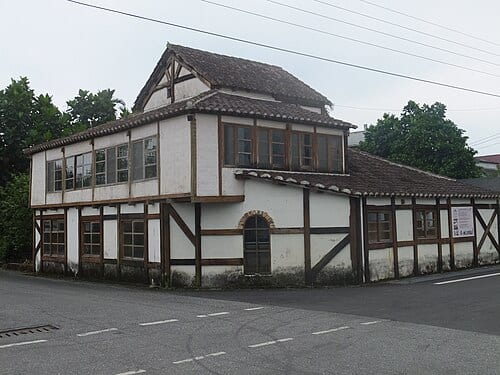
Fenglin Tobacco Barns are a cluster of tobacco-curing structures in Fenglin Township, Hualien, forming the highest density of such buildings anywhere in Taiwan. Most follow the Osaka-style design, marked by a raised ventilation chimney on the roof; after the Japanese left in 1945, Hakka immigrants took over the barns, and today more than 90 percent of the owners are Hakka.
Fenglin has the highest density of tobacco barns in Taiwan, with approximately 33 well-preserved barns (some counts including surrounding areas put the figure at about 48), mostly in the Osaka style with a raised roof ventilation chimney; after the Japanese departed in 1945, Hakka immigrants took over, and more than 90% of current owners are Hakka.
Highlights of Fenglin Tobacco Barns
During the Japanese colonial period, Japanese authorities implemented a tobacco monopoly policy in the Hualien-Taitung Rift Valley. Because the climate and soil around Fenglin were well suited to tobacco cultivation, large numbers of Hakka immigrants farmed here, forming a dense community of tobacco growers. Tobacco barns were purpose-built facilities for curing tobacco leaves, constructed of red brick or stone with internal drying racks and combustion chambers. Their arched ventilation openings are a defining exterior feature — simple in form yet striking in character.
Tobacco cultivation in Fenglin Township wound down through the 1990s, but the number of surviving tobacco barns remains the highest in Taiwan. Some barns are scattered among farmland and must be sought out along rural lanes, forming an unconventional architectural walking route. The more fully restored barns offer exhibitions and guided tours explaining the process of curing tobacco leaves and the rhythms of farm life, reflecting the agricultural policies of an entire era.
How to Make the Most of Your Visit
Practical Information
Getting There & Time
- Fenglin Township sits along Provincial Highway 9 through the rift valley. From Hualien City, the drive south is about 1 hour. Taiwan Railways' Fenglin Station is available, and bicycles can be rented near the station.
- The tobacco barns are spread over a wide area. Cycling is the most suitable way to explore them; walking to the main sites takes approximately 2 to 3 hours.
- Some privately owned tobacco barns are located next to residential farmland. Do not enter private property; observe and photograph from a distance.
Nearby Connections
- Lintianshan Forestry Culture Park lies to the north of Fenglin Township and can be combined for a half-day to full-day cultural themed itinerary.
- Yuli Town is approximately 20 kilometers to the south, continuing the southern rift valley segment.
Sources: Hualien County Cultural Affairs Bureau, Fenglin Township Office tourism information.
Frequently Asked Questions
Why does Fenglin have Taiwan's densest tobacco barn cluster?
Under Japanese-era tobacco monopoly policy, large numbers of Hakka farmers cultivated tobacco here, creating a dense barn cluster that remains the largest in Taiwan.
How many tobacco barns survive in Fenglin?
Roughly 33 well-preserved barns remain, with counts including the surrounding area reaching about 48.
Who owns the tobacco barns today?
Hakka immigrants took over after the Japanese left in 1945, and more than 90% of current owners are Hakka.
Sources
- 鳳林菸樓文化聚落 - 花蓮縣文化局 — 記載鳳林菸樓密度全台最高、大阪式構造特徵
- 鳳林菸樓活化再利用專題報導 — 記載1945年後客家人承接菸樓、現今九成以上屋主為客家人