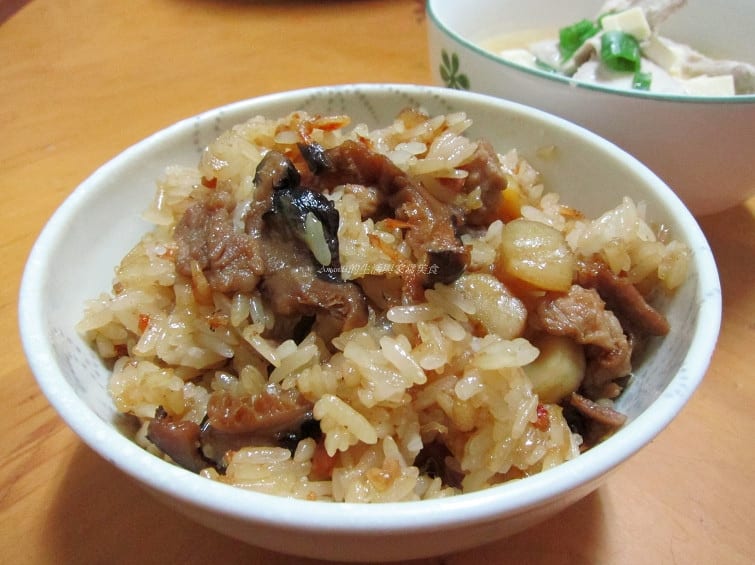
Glutinous oil rice is a traditional Taiwanese rice dish made from long-grain glutinous rice stir-fried with fried shallots, dried shrimp, and shredded pork before steaming, served as an offering at weddings, full-moon celebrations, and temple festivals. Walking into Dihua Street, the scent of herbs and preserved goods mingles with the aroma of rendered fat drifting from a stall — that is oil rice. Along this century-old street in Taipei's Datong District, which traces its earliest shops to 1851, oil rice is more than a breakfast item; it is a carrier for ceremonial occasions. Century-old shops on the street fry shallots by hand to release golden fat, ensuring every grain of glutinous rice is deeply flavored yet holds its shape.
Dihua Street's earliest shops date to 1851, with merchants from Quanzhou's Tong'an settling and building the street two years later; it is Taipei's most intact historic old street and the largest wholesale-retail market among the city's three major trades — preserved goods, Chinese medicine, and textiles. Since 1996, it has hosted the pre-Lunar New Year "Nianhuo Dajie" market, Taiwan's oldest and most iconic holiday shopping street. According to media reports, the century-old shop Lin He Fa Oil Rice on the street was founded in 1894, now in its fourth generation; it began as a pastry shop selling items like ang ku kueh and caozai guo before shifting to specialize in oil rice after the dish proved popular.
What is Glutinous Oil Rice
Oil rice is built on long-grain glutinous rice. Shallots are fried in lard or cooking oil until golden, then soy sauce is added for color, followed by dried shrimp, diced shiitake mushrooms, and shredded pork. The mixture is stirred together and steamed in a bamboo steamer until done. The finished rice has separate, evenly glossed grains with a slight springiness that does not stick to the teeth. The savory-sweet ocean note of dried shrimp and the caramelized fragrance of fried shallots are the flavor core; soy sauce gives it a pale amber color that looks simple but tastes full.
Oil rice was brought by Minnan immigrants as part of their rice food tradition and evolved in Taiwan into an essential offering for weddings, full-moon celebrations, and temple festivals. Dihua Street was historically the distribution center for preserved goods and Chinese medicinal herbs, and before major holidays the stalls were packed — oil rice became a natural accompaniment to festival shopping, eventually developing into its own standalone old-shop culture. Several nameless small shops in Datong have operated for decades on a steam-to-order, sell-same-day basis, portioned to single servings ideal for takeaway.
How to eat it like a local
Local knowledge
Verified endorsements
- Oil rice is a representative celebratory and temple rice dish in Taiwan, made by stir-frying glutinous rice with lard, soy sauce, and shallots before steaming, with toppings of shiitake mushrooms, dried shrimp, and shredded pork. The preparation method is documented in multiple sources on traditional Taiwanese food.
- Dihua Street is a Taipei City-designated historic district where the tradition of selling preserved goods and festival foods has continued for over a century. The Lunar New Year shopping street period draws large purchasing crowds.
- Local small shops in Datong such as Chen Ji You Fan operate on a steam-to-order basis with no chain expansion, preserving traditional handcraft methods.
Visiting tips
- Oil rice stalls typically have no fixed menu board or seating — takeaway is standard. Eat standing or find a spot under the adjacent arcade.
- Dihua Street is very crowded on weekends; weekday mornings are recommended. Parking is difficult; MRT Daqiaotou Station or Beimen Station and walking is most convenient.
- Some old shops only operate around traditional festivals and may not open on regular days. Call ahead or be prepared to try your luck.
Source: local food literature and field observation on Dihua Street.
Frequently Asked Questions
What occasions is oil rice traditionally eaten at?
Oil rice is a traditional offering at Taiwanese weddings, full-moon celebrations, and temple festivals, and also a common breakfast item on Dihua Street.
Where does oil rice's core flavor come from?
The caramelized aroma of fried shallots and the savory-sweet ocean note of dried shrimp form its flavor core, with soy sauce giving it a pale amber color.
How long has Dihua Street's oil rice shop been open?
According to media reports, Lin He Fa Oil Rice was founded in 1894 and has been run for over 130 years, now in its fourth generation.
How old is Dihua Street itself?
Its earliest shops date to 1851, making it Taipei's most intact historic old street and home to Taiwan's oldest Lunar New Year shopping street.
Sources
- 迪化街 — 迪化街歷史,最早商店1851年,三大行業最大批發市場
- 迪化街-年貨大街 — 交通部觀光署,年貨大街自1996年起舉辦
- 去大稻埕一定要早起搶這碗!林合發油飯1894年創業至今,郭董彌月油飯指定款 — 林合發油飯創立年份(媒體報導)