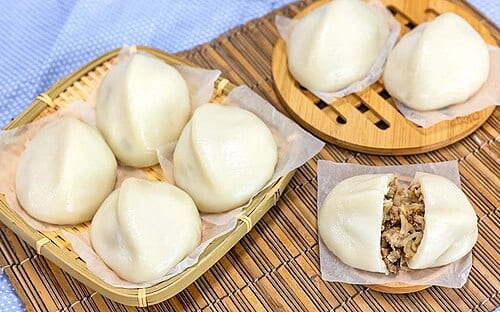
Fenglin Hakka Stuffed Rice Dumpling is a traditional Hakka glutinous-rice food with a skin made from rice paste and a filling of shredded radish and pork, steamed before eating. Peng Ji Caibao in Fenglin, Hualien, is a well-known local shop now run by its third generation, starting to steam fresh batches at 4 a.m. every day.
According to the official website of the Hualien County Hakka Affairs Department, Peng Ji Caibao in Fenglin is now run by its third generation, starting to steam its products at 4 a.m. daily, with signature items including Hakka caibao, ba-wan meatballs, rice cakes, and mugwort rice cakes that often sell out before 10 a.m.; the shop is located at No. 163, Section 2, Zhongzheng Rd., Fenglin, and operates roughly from 5:30 a.m. to noon. Fenglin is one of the townships in Hualien County with the highest concentration of Hakka residents, and its Hakka rice-food culture remains well preserved.
What is Fenglin Hakka Stuffed Rice Dumpling
Making Fenglin Hakka stuffed rice dumplings starts with soaking and grinding glutinous rice into paste, which is kneaded into the skin, then stuffed with a filling of shredded pork, pickled radish (caipu), and diced shiitake mushroom, sealed, and steamed. Fenglin's version has a distinctively glutinous skin that is not excessively thick; the skin-to-filling ratio is balanced with each bite. The filling leans sweet-spicy, and some old shops add a small amount of mustard greens (jie cai) for a bitter-sweet herbal note — the most noticeable flavor difference from Hsinchu or Miaoli Hakka caibao.
Fenglin Township's Hakka cultural promotion materials record caibao as a multi-decade heritage item at local old shops. Within Hakka culture, caibao originally served as a festive and ceremonial food; in Fenglin's immigrant settlement, it became an everyday snack through daily demand. Freshly steamed caibao stalls can be found at the Hualien Farmers' Association market and at Fenglin Old Street on weekends. Morning hours (7–11 a.m.) are the best time to buy; on holidays quantities can be limited, so arrive early.
How to eat it like a local
Local knowledge
Objective backing
- Fenglin Township's Hakka cultural promotion materials document caibao as a heritage item at local old shops with decades of continuity — one of the core representatives of Hualien Hakka food culture.
- Fenglin is the township in Hualien County with the highest concentration of Hakka people; Hakka rice food culture is well preserved, backed by official cultural promotion records.
- Hakka stuffed rice dumplings (caibao) are a traditional Hakka festive rice food, documented in Taiwanese Hakka academic and cultural preservation materials.
Visitor tips
- Weekend old street caibao stalls have limited quantities — aim to arrive before 9 a.m. to avoid selling out. On weekdays only a handful of shops supply them regularly.
- Parking on Fenglin Old Street is limited; taking the train and walking is recommended. The Fenglin train station is about a ten-minute walk from the old street.
- Some stalls have no fixed address listed. Search for recent food reviews online before you go to confirm the stall's current location so you don't spend time looking for it.
Sources: Fenglin Township Hakka cultural promotion materials; Fenglin Township Office historical documents.
Frequently Asked Questions
What time does Peng Ji Caibao in Fenglin open?
Steaming starts at 4 a.m. daily, with sales beginning around 5:30 a.m., and items often sell out before 10 a.m.
What's inside a traditional Hakka caibao?
The traditional filling is typically shredded radish and pork, wrapped in a glutinous rice skin and steamed.
What else is worth ordering there?
Peng Ji Caibao also sells ba-wan meatballs, rice cakes, and mugwort rice cakes alongside its caibao.
Sources
- 鳳林彭記菜包 — 花蓮縣客家事務局官方介紹,第三代經營、營業時間、招牌品項