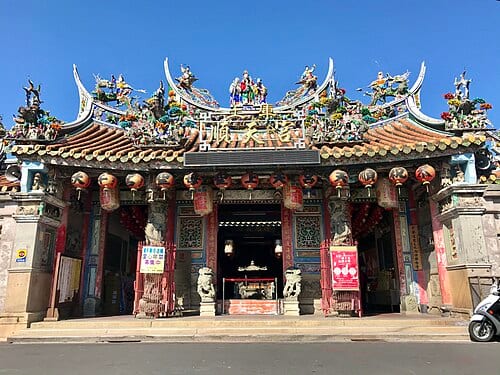
Tuku Shuntian Temple is a Mazu temple in Tuku Township, Yunlin County, traditionally said to have been founded during the Qing Shunzhi era, with its present appearance shaped mainly by a major 1936 renovation and its 2012 designation as a Yunlin county-level historic monument.
Tuku Shuntian Temple is traditionally said to have been founded during the Qing Shunzhi era (1644–1661); records show the front hall was built in 1834 (Daoguang 14), the rear hall in 1851 (Xianfeng 1), and the right wing added in 1876 (Guangxu 2), while the temple's present appearance mainly dates from a major renovation in 1936 (Showa 11) under Japanese rule. It was designated a Yunlin county-level historic monument (temple category) on October 31, 2012; its main hall enshrines Mazu.
Highlights of Tuku Shuntian Temple
Shuntian Temple's principal deity is Mazu. More than three hundred years have passed since the temple was founded in the Qing Yongzheng era, during which it has undergone multiple renovations and reconstructions. The current layout centers on the Sanchuan Hall and the Main Hall; renovations carried out in the 1910s during the Japanese colonial period established the building's primary present-day form. The temple's designation as a historic site stems from the preservation value of its craftsmanship: roof-ridge jiannen work uses ceramic shards to assemble floral, bird, and opera scene motifs, while the Main Hall murals display the brushwork of traditional folk painters.
The temple forecourt is the center of public life in Tuku Township. Regularly held traditional procession troupe performances include Songjianzheng and lion troupes; activities concentrate around Mazu's birthday (the twenty-third day of the third lunar month) and major festivals. During temple fairs, the surrounding streets form a traditional market, providing a concrete setting in which to observe Yunlin's folk festival culture.
How to Make the Most of Your Visit
Practical Information
Getting There and Time
- Tuku Township has no train station; driving is most convenient. From Dounan Train Station, you can take a bus or taxi, about a 15-minute ride.
- The temple is generally open all day; please be mindful of the temple's activity schedule when visiting and avoid disturbing ceremonies in progress.
- Temple fair activity times follow the lunar calendar; it is advisable to check official information from Shuntian Temple before setting out.
Nearby Connections
- Can be paired with Baozhong Maming Temple (Zhenan Palace) to plan a Yunlin coastal temple faith culture route.
- The area around Tuku Township is part of Yunlin's agricultural plain; driving allows you to take in the rural scenery of Yuanchang and Sihu townships along the way.
Sources: Cultural Heritage Bureau, Ministry of Culture historic site records and local historical and cultural research.
Frequently Asked Questions
When was Tuku Shuntian Temple founded?
It is traditionally said to have been founded during the Qing Shunzhi era (1644–1661), though records show the front hall was built in 1834.
When did the temple take its current appearance?
Its present form mainly dates from a major renovation carried out in 1936 (Showa 11) under Japanese rule.
When was Tuku Shuntian Temple designated a historic monument?
The Yunlin County Government designated it a county-level historic monument (temple category) on October 31, 2012.
Sources
- 土庫順天宮-臺灣宗教文化地圖 — 內政部民政司官方宗教文化地圖,記載創建年代、建築沿革與古蹟公告日期