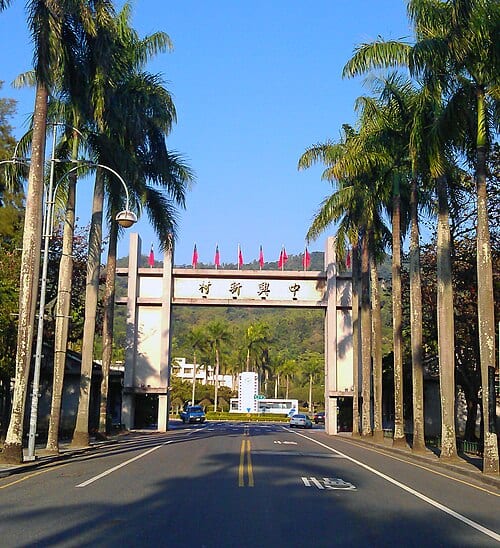
Zhongxing New Village is a former Taiwan Provincial Government town built in 1957 on the principles of Ebenezer Howard's garden city model, featuring a grid street network, low-density housing, and abundant tree-lined avenues. Construction began in 1955, and the provincial government relocated from Taipei in 1956. Following the 1999 downsizing of the provincial government, the town's population declined sharply, but its orderly urban layout and mature trees remain well preserved.
Zhongxing New Village began construction in 1955; the Taiwan Provincial Government relocated its offices here from Taipei in 1956, and the overall urban design — modeled on Britain's New Towns (garden city) movement — was completed in 1957, with an initial planned area of about 200 hectares. After the 1999 provincial government downsizing, the town's administrative functions and population shrank significantly.
Highlights of Zhongxing New Village
The street system of Zhongxing New Village follows the original provincial government-era planning, with wide pedestrian paths and tree-lined avenues on both main thoroughfares and residential streets. The trees are generally several decades old and form green tunnel effects in summer. Most buildings are government dormitories in styles ranging from the late Japanese colonial period to the early Republic of China era, and some remain in good condition. The Executive Yuan's Central Regional Joint Service Center still operates here, and some of the former buildings have been taken over by creative industries, giving the spaces dual functions of historical preservation and contemporary use.
The atmosphere in Zhongxing New Village is quiet and quite different from typical tourist areas — best explored on foot or by bicycle at a leisurely pace. Guangfu New Village, another planned community from a similar era, is located just south of Zhongxing New Village and has been transformed into a creative market setting. Including both in the same itinerary creates an interesting contrast. Weekend markets occasionally take place in Zhongxing New Village; check in advance for any scheduled events.
Tips for Making the Most of Your Visit
Practical Information
Getting There & Time Required
- Located in Nantou City, about 10 minutes by car from Caotun. Reachable by city bus from the Nantou Bus terminal; driving and parking is more convenient.
- Exploring the main streets on foot takes about 1.5 to 2 hours; combined with Guangfu New Village, a half-day itinerary is recommended.
Nearby Connections
- Caotun is about 15 minutes north; the National Taiwan Craft Research and Development Institute (formerly the Taiwan Handicraft Promotion Center) in Caotun can be included in the same outing.
- There are many local restaurants in Nantou City; you can arrange to have a meal in the city after exploring Zhongxing New Village.
Sources: Executive Yuan Central Regional Joint Service Center, Nantou County Cultural Affairs Bureau related materials.
Frequently Asked Questions
When was Zhongxing New Village built?
Construction began in 1955, the provincial government relocated its offices there in 1956, and the overall urban design was completed in 1957.
Where did the planning concept for Zhongxing New Village come from?
It was modeled on Ebenezer Howard's British garden city (new town) theory, featuring a grid street network, low-density housing, and abundant tree-lined avenues.
Why did the town's population decline sharply?
Following the 1999 downsizing of the Taiwan Provincial Government, its administrative functions were greatly reduced, leading to a population decline, though the urban layout remains well preserved.
Sources
- 中興新村 - 維基百科 — 建村年份、規劃面積
- 「國內有省,省中有國」的中興新村是如何誕生的? - 故事 StoryStudio — 田園城市規劃背景