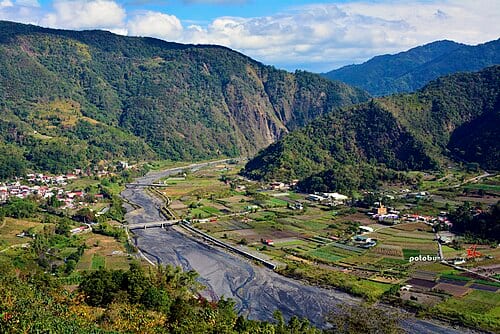
Wujie Tribal Village is a Bunun community in Nantou County's Ren'ai Township, set in the gorge of the upper Zhuoshui River, where rugged terrain kept it relatively isolated for a long time. The adjacent Wujie Dam and its diversion tunnel were part of the Japanese colonial-era "Sun Moon Lake Hydroelectric Project," first proposed in 1917, halted twice by World War I and the Great Kanto Earthquake, resumed in 1931, and completed in 1934; the 15.12-km tunnel channels water from the Zhuoshui and Wanda rivers to Sun Moon Lake for power generation. In recent years the community has begun developing tourism, giving outsiders a chance to learn about Bunun eight-part harmony and mountain culture.
The Wujie Dam and its diversion tunnel were part of the Japanese colonial-era Sun Moon Lake Hydroelectric Project: proposed in 1917, halted twice (by WWI and the 1923 Great Kanto Earthquake), resumed in 1931, and completed in 1934. The 15.12-km tunnel — made up of 8 unpressurized tunnel sections, 3 open channels, 4 covered channels, and 1 aqueduct — diverts water from the Zhuoshui and Wanda rivers to Sun Moon Lake for hydropower.
Highlights of Wujie Bunun Tribal Village
The Wujie area is shaped by interlocking gorges and streams, producing dramatic natural scenery. The Wujie Dam was a key facility in Taiwan's colonial-era electricity development; the diversion tunnel bored through the mountain to channel water to Sun Moon Lake for power generation, an impressive engineering feat for its time. The village itself retains the traditional layout of a Bunun mountain settlement, surrounded by forest that once served as the community's hunting and farming grounds.
The Bunun people are world-renowned for their pasibutbut — an eight-part polyphonic ceremonial chant. Members of the Wujie community demonstrate traditional songs and ritual culture on special occasions. Since opening to tourism, the village has offered guided tours explaining hunting culture, traditional farming, and the Bunun philosophy of living in harmony with nature. Visitors to indigenous communities should respect local etiquette and contact the village or a tour operator in advance to arrange a proper visit.
Making the most of your visit
Practical information
Getting there and time needed
- Wujie is remote. Driving is the primary way to get there, but the road is winding and narrow. Drivers should have mountain-road experience. Roads can close during typhoon season — confirm conditions before you go.
- Community tourism requires prior confirmation with your host. Allow half a day to a full day; overnight accommodation, if arranged, allows for a deeper experience.
Nearby connections
- Wujie is close to other Bunun communities in Ren'ai Township. Ask your guide about cultural trail routes linking nearby villages.
- Heading back toward Puli, you can continue into the town center or carry on to Sun Moon Lake, combining a mountain community visit with lake scenery.
Some information supplemented from public sources. Please respect tribal culture and etiquette when visiting indigenous communities.
Frequently Asked Questions
When was the Wujie Dam completed?
The Wujie Dam was part of the Japanese colonial-era Sun Moon Lake Hydroelectric Project, proposed in 1917 and completed in 1934 after two construction halts.
Which indigenous group lives in Wujie?
Wujie is a Bunun tribal village located in the gorge of the upper Zhuoshui River in Nantou County's Ren'ai Township.
How long is the Wujie diversion tunnel?
The tunnel is 15.12 km long and channels water from the Zhuoshui and Wanda rivers to Sun Moon Lake for power generation.
Sources
- 武界壩 - 維基百科 — 武界壩興建年代、停工復工歷程與引水隧道規格