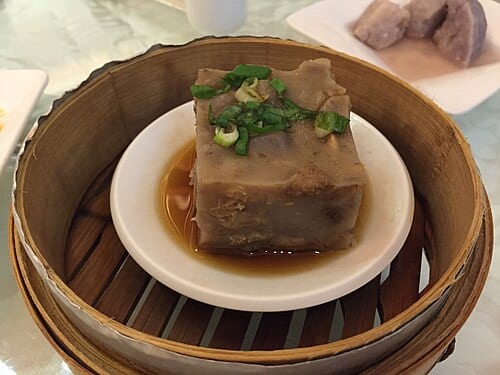
Taro cake is a traditional Min-Dong rice pastry made in Matsu by steaming mashed taro combined with glutinous rice flour; Matsu's food culture broadly traces back to Fuzhou traditions, and rice cakes like this are commonly served at festive occasions.
Multiple media reports confirm that Matsu's food culture traces back to Fuzhou's Min-Dong traditions, with common rice-based snacks such as fried oyster cakes, Jiguang biscuits, and ding bian hu all belonging to this lineage. Taro cake, as a rice-cake pastry, sits within the same tradition; however, specific stall locations and festive-season supply details have limited public documentation and were not individually verified for this entry.
What Is Taro Cake
Matsu's taro cake uses local small taro — some vendors use the 'betel nut taro' variety for a richer aroma — steamed until soft and mashed into a smooth paste, then mixed with glutinous rice flour into a batter and poured into molds to steam. The texture is dense and sticky-soft; the cross-section is a pale purple-grey. The dominant flavor is mild sweetness. Some traditional recipes add five-spice powder or a drizzle of scallion oil for a savory counterpoint, and sesame versions also exist. It can be eaten directly in slices, or pan-fried until the surface is lightly charred, which produces a completely different texture.
Taro cake (called 'yu guo' in Min-Dong) is a traditional pastry from across the Fuzhou prefecture counties. In the Min-Dong culinary tradition, it is a festive food rather than an everyday breakfast item — a distinction from the savory taro cake positioning on Taiwan proper. The Matsu version faithfully preserves the Fuzhou steamed cake craft: rice-based cakes must be 'fully steamed without collapsing and clean-cut without sticking to the knife,' demonstrating the skill of controlling heat and glutinous flour ratios. The Lianjiang County Tourism Bureau's souvenir gift guide and the Matsu Daily's festive food customs reporting both document taro cake as an important part of Matsu's Min-Dong food culture.
How to Eat It the Local Way
Local Knowledge
Verified References
- The Lianjiang County Tourism Bureau's souvenir gift guide lists taro cake as a representative traditional Matsu pastry and explains its connection to Fuzhou Min-Dong food culture.
- The Matsu Daily's festive food customs reporting documents the use of taro cake at wedding banquets, ancestral rites, and Lunar New Year celebrations, reflecting its symbolic role in Matsu culture.
Visitor Notes
- Nangan's Fuxing Road cake stalls do not always have freshly steamed stock every day. Ask your guesthouse host the evening before or call ahead to avoid a wasted trip.
- The period just before Lunar New Year (the 12th lunar month) is the easiest time to find taro cake. Outside festive season, ask traditional pastry shops whether pre-orders are accepted.
Sources: Lianjiang County Tourism Bureau souvenir gift guide; multiple Matsu travel bloggers' records; Matsu Daily festive food customs reporting.
Frequently Asked Questions
Where does Matsu's food culture come from?
Matsu belongs to the Min-Dong cultural sphere, and its food habits mainly trace back to Fuzhou traditions.
What category of food is taro cake?
It is a rice-cake pastry made by steaming mashed taro mixed with glutinous rice flour.
When is taro cake easiest to find?
Traditionally it is more common at festive occasions like Lunar New Year and weddings; check with local guesthouses or markets for current availability before visiting.
Is Matsu taro cake the same as the version on Taiwan proper?
No — Matsu's version leans sweet in the Min-Dong style, while the version common on Taiwan proper is typically savory.
Sources
- 馬祖飲食源於福州 蠣餅、繼光餅、鼎邊糊等 — 馬祖米食小吃源自福州閩東飲食傳統