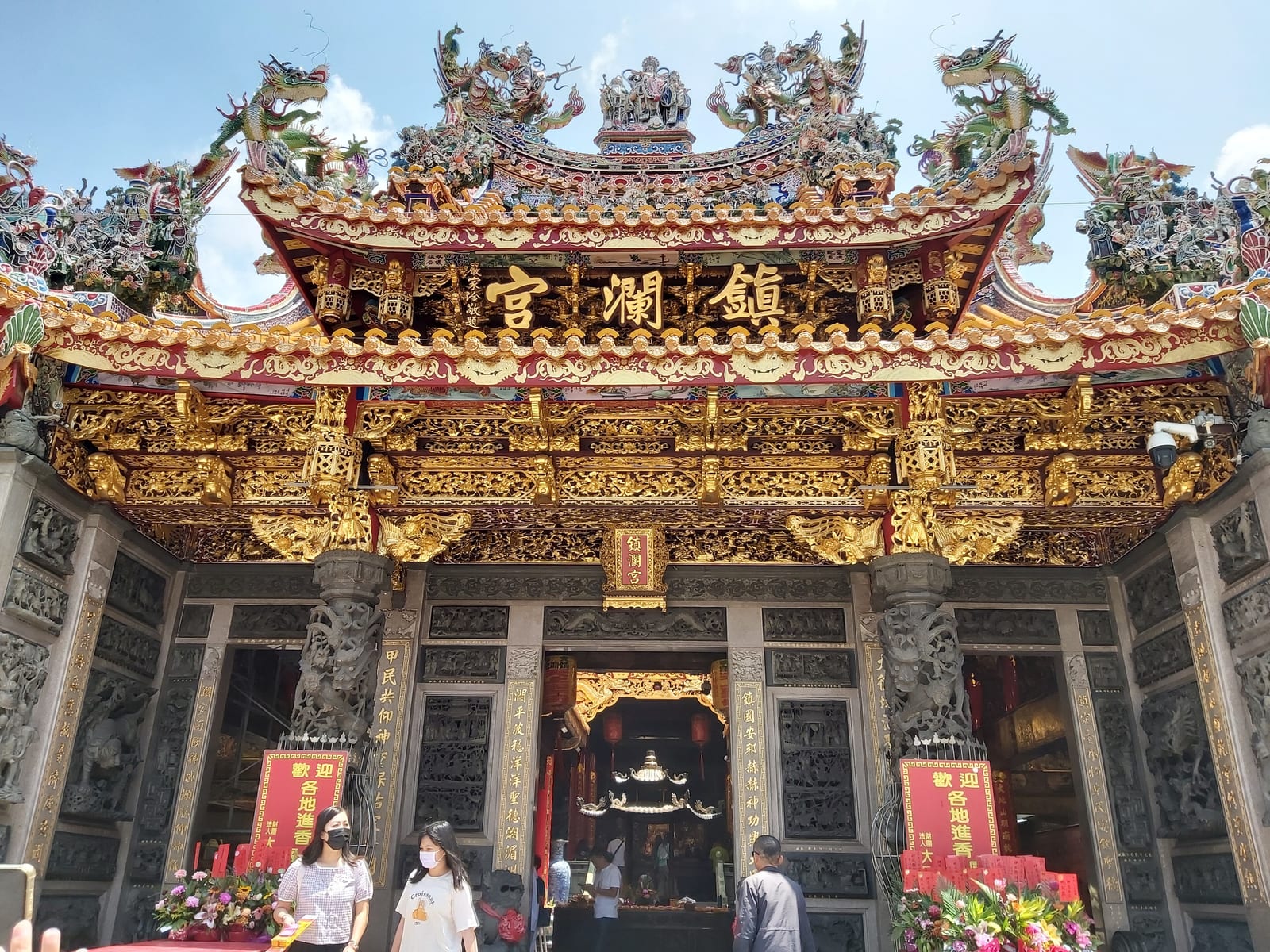
Dajia Jenn Lann Temple is a Qing-dynasty Mazu temple in Taichung's Dajia District, with its original shrine dating to 1732 and its expansion to the present name in 1787. The annual Dajia Mazu Pilgrimage, held every third lunar month, covers roughly 340 kilometres on foot over nine days and eight nights across Taichung, Changhua, Yunlin, and Chiayi, and was designated a National Important Folk Custom in 2011 — one of Taiwan's largest religious processions.
The temple's original shrine was built in 1732 (Yongzheng 10) and expanded into today's Jenn Lann Temple in 1787 (Qianlong 52). The annual Dajia Mazu Pilgrimage covers about 340 kilometres on foot across Taichung, Changhua, Yunlin, and Chiayi — 21 townships and over 100 temples — over nine days and eight nights, and was designated a National Important Folk Custom on 8 April 2011 by the Council for Cultural Affairs (now the Ministry of Culture).
Highlights of Dajia Jenn Lann Temple
Dajia Jenn Lann Temple is located in Dajia District, Taichung. The temple was originally established during the Yongzheng reign (1723–1735) and has undergone multiple expansions and renovations over the centuries. The current complex is imposing in scale, with intricate and elaborate carved and decorative detail — an important example of Taiwanese temple architecture. The goddess Tianshang Shengmu (Mazu) is enshrined inside, and the temple draws worshippers from all over Taiwan throughout the year.
The Dajia Mazu Pilgrimage Procession is held during the third lunar month each year; because lunar calendar dates shift against the solar calendar, the Gregorian dates vary each year — check before visiting. The procession departs from Dajia and passes through Changhua, Yunlin, and other areas on its way to Fengtian Temple in Xingang, covering approximately 340 kilometres in total. It draws hundreds of thousands of participants and is regarded as one of the most representative folk events in Taiwan.
How to Make the Most of Your Visit
Practical Information
Getting There & Hours
- Dajia Jenn Lann Temple is open year-round with no admission fee. Check the official website for service hours; traffic controls apply in the surrounding area during the pilgrimage period.
- From Dajia TRA Station, walk or take a taxi for about 10 minutes. By car, take Provincial Highway 1 or exit National Freeway 1 at the Dajia Interchange and follow the signs.
Nearby Connections
- Gaomei Wetland is about 20 minutes away by car; Wuqi Fishing Harbour is also nearby — combine these for a Taichung coastal itinerary.
- The old street around Dajia is well known for butter pastries and traditional Taiwanese sweets; browse the shops for souvenirs after paying your respects.
Sources: Dajia Jenn Lann Temple official information; Wikipedia entry on Dajia Jenn Lann Temple.
Frequently Asked Questions
When was Dajia Jenn Lann Temple built?
Its original shrine was built in 1732 and it was expanded and renamed Jenn Lann Temple in 1787.
How long and how far is the Dajia Mazu Pilgrimage?
It covers about 340 kilometres over nine days and eight nights across four counties and cities.
Is the pilgrimage officially recognized?
Yes, it was designated a National Important Folk Custom on 8 April 2011 by the Council for Cultural Affairs (now the Ministry of Culture).
Which deity is enshrined at the temple?
The temple's principal deity is Tianshang Shengmu, better known as Mazu.
Sources
- 大甲鎮瀾宮 - 維基百科 — 建廟沿革(雍正10年建小祠、乾隆52年擴建定名)
- 大甲媽祖遶境進香 - 維基百科 — 遶境路線340公里、九天八夜、2011年登錄國家重要民俗